Posture Improvement Mistakes: Must-Have Tips to Avoid Common Errors
Improving your posture is essential for overall health, comfort, and confidence. However, many people unknowingly make posture improvement mistakes that can hinder their progress or even cause additional problems. Understanding these common pitfalls and incorporating effective posture improvement tips can help you achieve better alignment, reduce discomfort, and promote long-term spinal health.
In this article, we’ll explore some of the most frequent posture improvement mistakes and share practical advice to help you avoid them.
Common Posture Improvement Mistakes to Watch Out For
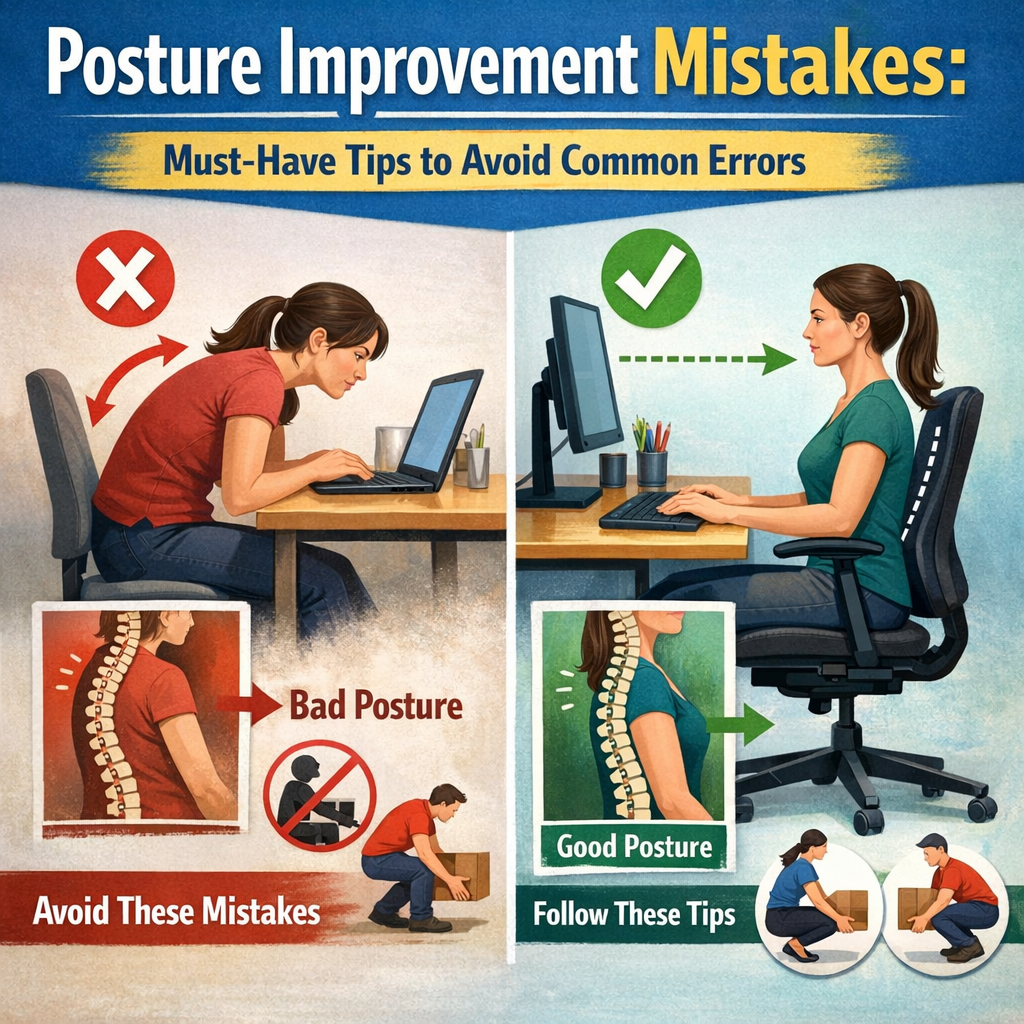
1. Ignoring Ergonomics in Daily Activities
One of the biggest posture improvement mistakes is overlooking the role of ergonomics in your everyday environment. Whether you’re sitting at a desk, using a smartphone, or sleeping, the way your body is positioned matters.
For example, many people slouch while working on a computer, leading to rounded shoulders and forward head posture. This can cause stiffness, pain, and long-term damage to your spine. Adjusting the height of your chair, using a supportive backrest, and keeping your screen at eye level are vital changes to improve your posture effortlessly throughout the day.
2. Relying Solely on Reminder Apps or Devices
While posture correction devices and reminder apps can be helpful, relying on them exclusively without understanding the underlying mechanics of good posture is a common mistake. These tools may prompt you to sit up straight temporarily, but sustainable improvement comes from building strength, flexibility, and awareness in your body.
Instead, use these devices as a supplement to your posture improvement tips, not as a replacement for mindful practice and exercise.
3. Overcorrecting Posture
Many people mistakenly believe good posture means sitting or standing as straight as possible without any curvature, leading to an unnatural, rigid stance. This overcorrection can cause muscle tension and fatigue.
Ideal posture involves maintaining the natural curves of the spine — a slight inward curve at the lower back, a gentle outward curve in the upper back, and a slight inward curve in the neck area. Learning to recognize and maintain these natural curves is a crucial part of effective posture improvement.
4. Neglecting Core and Back Strengthening Exercises
Posture improvement efforts can fall short if you ignore the strength component. Weak core and back muscles make it challenging to maintain proper posture throughout the day. Many individuals make the mistake of focusing only on stretching or standing/sitting “straight” without building the muscle support needed.
Incorporate exercises such as planks, bridges, and rows into your routine to enhance your core and back strength. These exercises will help stabilize your spine and make good posture feel more natural.
5. Not Paying Attention to Footwear
Footwear is often an overlooked factor in posture improvement. Wearing high heels or unsupportive shoes regularly can throw off your alignment, causing poor posture patterns that radiate up the body.
Choose shoes with proper arch support and cushioning to help keep your posture balanced, especially if you spend long hours on your feet.
Effective Posture Improvement Tips for Long-Term Success
1. Practice Mindful Posture Checks
Regularly check your posture throughout the day. Take a moment every hour to assess how you’re sitting or standing. Are your shoulders relaxed? Is your head aligned with your spine? This simple habit is a powerful tip to increase posture awareness and prevent slumping.
2. Incorporate Stretching Into Your Routine
Stretching tight muscles can greatly improve posture. Focus on muscles often affected by poor posture, such as the chest, hip flexors, and hamstrings. Tight chest muscles pull your shoulders forward, while tight hip flexors can cause pelvis misalignment.
Incorporate stretches like doorway chest stretches, hip flexor lunges, and hamstring stretches to release tension and support better alignment.
3. Use Supportive Workstation Accessories
Utilize ergonometric tools such as lumbar support pillows, standing desks, and adjustable chairs. These accessories can help maintain the natural spinal curves and encourage a neutral posture throughout your workday.
4. Engage in Regular Movement and Breaks
Sitting or standing in one position for long periods is detrimental to posture. Get up, move around, and change positions frequently. Even a few minutes every hour can relieve pressure on your spine and prevent stiffness.
5. Seek Professional Guidance When Needed
If you experience persistent pain or difficulty maintaining good posture, consulting a physical therapist or chiropractor can provide personalized evaluation and interventions. Professionals can recommend targeted exercises and corrections tailored to your specific needs.
Conclusion
Avoiding common posture improvement mistakes is key to achieving and maintaining a healthy, comfortable alignment. By being mindful of ergonomic setups, strengthening your core, avoiding overcorrection, and incorporating effective posture improvement tips into your daily routine, you can ensure that your efforts lead to lasting benefits.
Remember, improving posture is a gradual process that requires consistency and awareness. With the right approach, you’ll not only look more confident but also feel better and reduce the risk of chronic pain. Start making these changes today, and your body will thank you for years to come.