How to Improve Meditation for Beginners: Stunning Tips for Effortless Focus
Meditation is a powerful practice that offers countless benefits, from reducing stress to enhancing mental clarity and emotional balance. However, if you’re new to meditation, you might find it challenging to maintain focus or even get started. Knowing how to improve meditation for beginners can make your journey smoother and more rewarding. This guide shares stunning tips to help you develop effortless focus and deepen your meditation practice with ease.
Understanding the Basics: Why Focus Matters
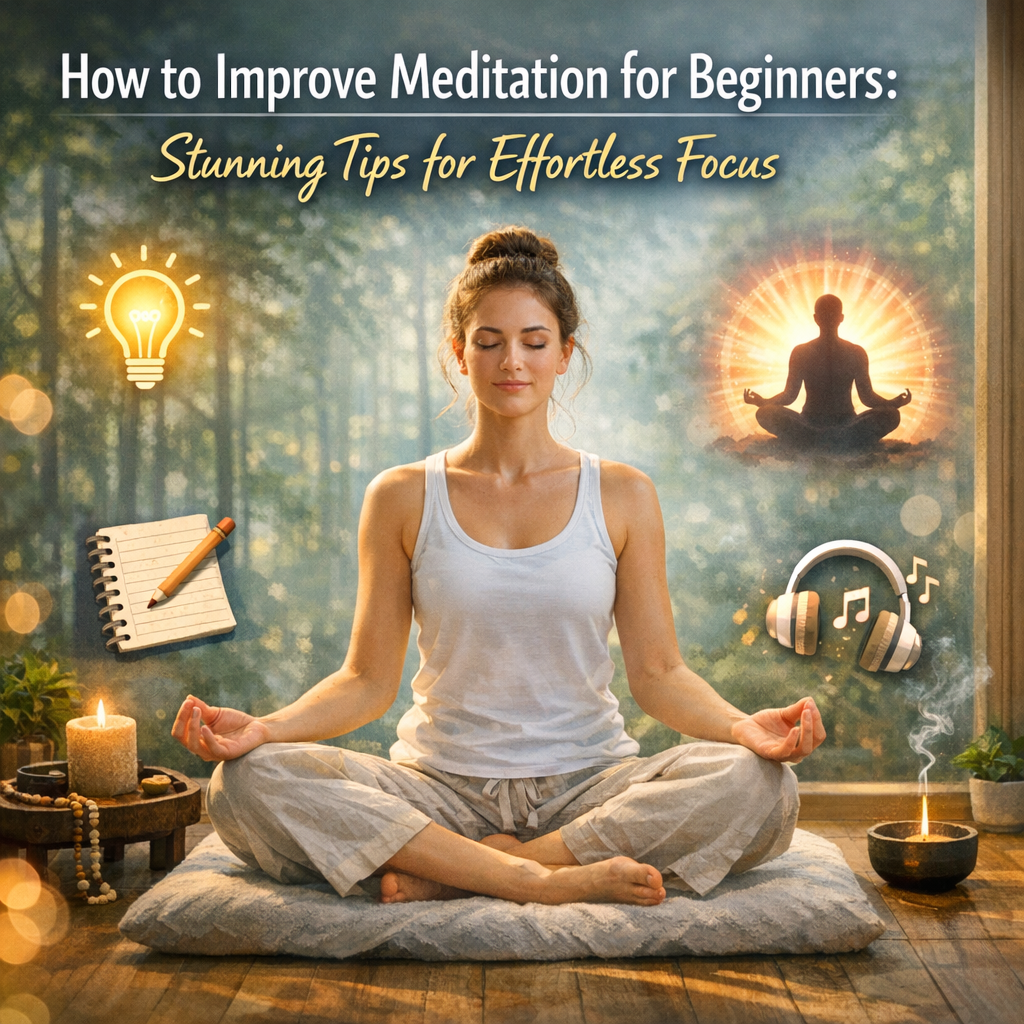
Before diving into practical advice, it’s essential to understand why focus is a cornerstone of meditation. Meditation is essentially training your mind to be present and attentive. Without focus, it’s easy to become distracted by thoughts, sensations, or external noise. When you improve meditation for beginners by cultivating focus, you create a stable foundation that allows you to experience meditation’s full benefits.
Create a Comfortable and Distraction-Free Environment
One of the simplest ways to improve meditation for beginners is to set up your environment for success. Find a quiet spot where interruptions are minimal. Use cushions, mats, or chairs that support a comfortable posture but avoid lying down since this might lead to drowsiness.
Lighting can also affect your focus. Natural light or soft lamps create a calming atmosphere. Additionally, consider turning off phones and other devices or enabling “Do Not Disturb” mode to minimize distractions during your meditation sessions.
Start with Short, Consistent Sessions
Many beginners make the mistake of starting with long sessions, which can feel daunting and lead to frustration. To improve meditation for beginners, begin with just 5 to 10 minutes daily. Consistency is far more important than duration when you’re building new habits. Over time, your ability to maintain focus and your overall comfort with meditating will naturally increase.
Use a timer so you don’t have to check the clock, allowing your mind to settle deeply without interruptions. Gradually extend your meditation time as your focus and endurance improve.
Use Guided Meditations to Stay on Track
Guided meditations are excellent tools for beginners learning how to improve meditation. They provide a roadmap, usually with verbal instructions and calming music or ambient sounds that keep your mind from wandering.
You can find guided meditation apps or online videos focused on breath awareness, body scans, or mindfulness techniques. These guides help anchor your attention and reinforce proper meditation habits, making your practice feel supportive and engaging.
Focus on Your Breath: The Anchor of Meditation
Breath is perhaps the most accessible and effective anchor for focus during meditation. When you pay attention to your breathing, it naturally calms the nervous system and brings your mind back whenever it drifts away.
To improve meditation for beginners, practice counting your breaths or noticing the sensation of air moving in and out of your nostrils. You might try a simple technique such as inhaling for a count of four, holding for four, and exhaling for four. This rhythmic breathing not only enhances focus but also relaxes your body deeply.
Embrace Distractions as Part of the Process
It’s normal for beginners to get frustrated when their minds wander. Instead of resisting, acknowledge distractions gently and bring your attention back to your breath or chosen point of focus. Understanding that this is part of the meditation process takes the pressure off and helps cultivate patience and compassion towards yourself.
Mind-wandering doesn’t mean you have failed; it means your mind is doing its job. The practice is all about returning, again and again, to present-moment awareness.
Incorporate Mindfulness into Daily Activities
Improving meditation for beginners doesn’t have to be limited to seated practice. Mindfulness can be woven into everyday activities, such as eating, walking, or washing dishes. Paying full attention to these simple actions trains your brain to focus more effectively, which carries over into your formal meditation sessions.
Try to engage your senses fully in these moments, noticing colors, textures, sounds, smells, and sensations with curiosity and openness.
Use Visualization and Mantras for Deeper Focus
Some beginners find visualization or repeating mantras helpful when learning how to improve meditation. Visualizations might include imagining a peaceful place, a glowing light, or a symbol that resonates with calmness. Mantras, which are words or phrases repeated silently or aloud, help to center the mind and cultivate specific qualities like love or tranquility.
Experimenting with these techniques can make meditation more accessible and enjoyable, especially if you struggle with purely breath-focused meditation.
Track Your Progress and Celebrate Small Wins
Keeping a meditation journal or using an app can motivate you to continue practicing regularly. Document your experiences, noting what techniques worked best, how focused you felt, and any changes in your mood or mental state. Celebrating small successes reinforces positive habits and encourages long-term commitment.
—
Final Thoughts
Improving meditation for beginners is a gentle, ongoing process that requires patience and practice. The key lies in creating a supportive environment, starting small, and using tools like guided meditations and breath focus. Embracing distractions and integrating mindfulness into daily life further enhances your ability to maintain effortless focus.
With these stunning tips, meditation will soon become a natural part of your routine — bringing calm, clarity, and balance into your busy world. Remember, every moment spent in practice is a valuable step toward a more peaceful mind.