Desk Exercises for Beginners: Must-Have Easy Moves for Success
Desk exercises for beginners offer a practical and effective way to maintain physical health and mental sharpness, especially for those who spend long hours seated at a desk. Whether you’re working from home, in an office, or studying, incorporating simple movements into your daily routine can enhance circulation, reduce stiffness, and boost overall wellbeing. This guide will walk you through some beginner desk exercises that are easy to perform and can fit seamlessly into your workday, helping you stay active and productive.
Why Desk Exercises for Beginners Matter
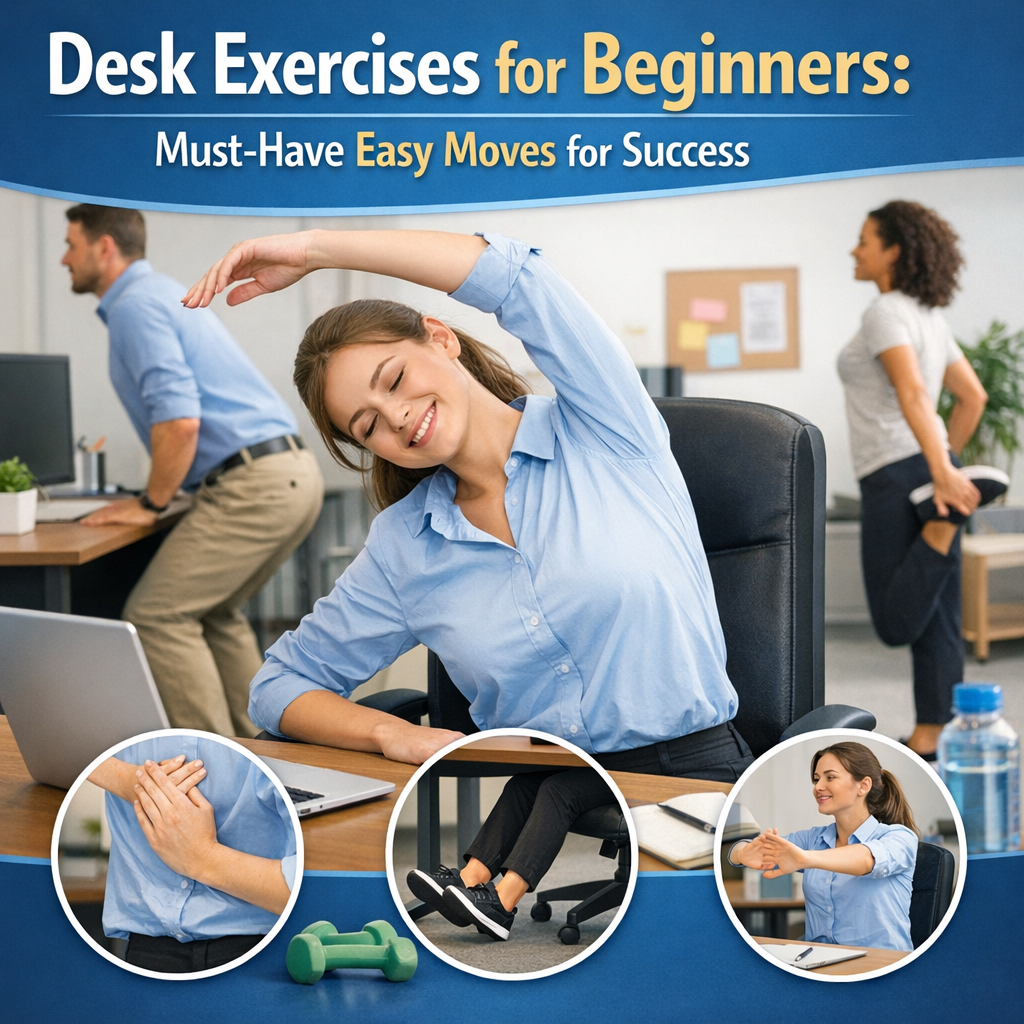
Spending prolonged periods sitting can take a toll on your body. It can lead to poor posture, muscle tightness, and even long-term health issues such as back pain and reduced cardiovascular health. For beginners, starting with gentle, manageable exercises at your desk is an excellent way to counteract the effects of sedentary behavior without needing special equipment or extensive time.
Desk exercises for beginners are specifically designed to be simple, low-impact, and adaptable to your work or study environment. They don’t disrupt your workflow and can significantly improve your comfort and focus during the day.
Beginner Desk Exercises to Get You Started
To kick off your journey toward a healthier desk routine, here are some must-have beginner desk exercises that you can easily incorporate. These moves target common problem areas like the neck, shoulders, back, and legs.
1. Seated Neck Stretches
Tension often builds up around the neck and shoulders after hours of staring at screens or typing. Neck stretches help relieve this tightness and improve flexibility.
How to do it:
– Sit up straight with your feet flat on the floor.
– Slowly tilt your head to the right, aiming to bring your ear toward your shoulder.
– Hold for 15-20 seconds, then return to the center.
– Repeat on the left side.
– Perform 3-4 reps per side.
2. Shoulder Rolls
Shoulder rolls promote mobility and ease stiffness in the upper back and shoulders — areas that tend to get tight from poor posture.
How to do it:
– Sit upright and relax your arms by your sides.
– Slowly lift your shoulders toward your ears.
– Roll them backward in a circular motion.
– Do 10 rolls backward, then switch to 10 rolls forward.
– Remember to breathe deeply as you move.
3. Seated Spinal Twist
Twisting exercises help maintain spinal health and reduce lower back stiffness.
How to do it:
– Sit tall with your feet flat on the floor.
– Place your right hand on the back of your chair, and your left hand on your right knee.
– Gently twist your torso to the right, looking over your shoulder.
– Hold for 15 seconds, then release.
– Repeat on the opposite side.
– Perform 2-3 reps per side.
4. Leg Extensions
Leg extensions improve circulation and strengthen your quadriceps, which can help prevent leg fatigue and stiffness.
How to do it:
– Sit on the edge of your chair with your feet flat on the floor.
– Slowly extend your right leg straight out, keeping it parallel to the floor.
– Hold for 5 seconds, then lower it back down.
– Repeat with the left leg.
– Do 10-15 reps on each leg.
5. Wrist and Finger Stretches
Those who type extensively can benefit from wrist and finger stretches to reduce strain and the risk of repetitive stress injuries.
How to do it:
– Extend your right arm in front of you, palm facing outward.
– Use your left hand to gently pull back on your fingers.
– Hold for 15 seconds, then switch hands.
– For fingers, open your hand wide, then make a fist.
– Repeat 10 times on each hand.
Tips for Incorporating Beginner Desk Exercises into Your Day
Starting a new habit can be challenging, but with the right approach, these beginner desk exercises can become a natural part of your day. Here are some helpful tips:
– Set reminders: Use your phone or computer to remind you to take exercise breaks every hour.
– Start small: If you’re new to moving regularly, begin with just 5 minutes of these exercises and gradually increase.
– Keep it consistent: Consistency is more important than duration. Try to practice daily or at least most workdays.
– Listen to your body: Don’t push to the point of pain. Exercises should be comfortable and gentle.
– Stay hydrated: Drinking water supports overall health and helps keep your muscles flexible.
Benefits Beyond Physical Health
Aside from preventing discomfort and postural problems, desk exercises for beginners can enhance your mental sharpness and mood. Movement boosts blood circulation, delivering more oxygen to your brain, which can improve concentration and creativity. Taking short breaks for stretching or simple exercises also gives your mind a rest from constant screen time, reducing eye strain and stress.
Conclusion
Integrating beginner desk exercises into your daily routine is an excellent strategy for improving your physical health without disrupting your workload. With just a few easy moves targeting key areas prone to tension and stiffness, you can stay energized, comfortable, and focused throughout the day. Remember, the goal is to make gentle, consistent movement a habit that supports your long-term wellness and success at work or study.
Start today by trying these simple exercises—you’ll soon notice the difference in how you feel seated at your desk and beyond!