Daily Habits for Posture Improvement: Must-Have Routine for Best Results
Good posture is more than just standing tall — it’s a vital component of overall health, affecting your body, confidence, and even energy levels throughout the day. Incorporating daily habits for posture improvement into your lifestyle can help you avoid chronic pain, reduce the risk of injury, and enhance your appearance. Whether you work at a desk, carry heavy loads, or simply want to feel better in your body, a consistent posture improvement routine is essential for achieving lasting results.
Why Daily Habits for Posture Improvement Matter
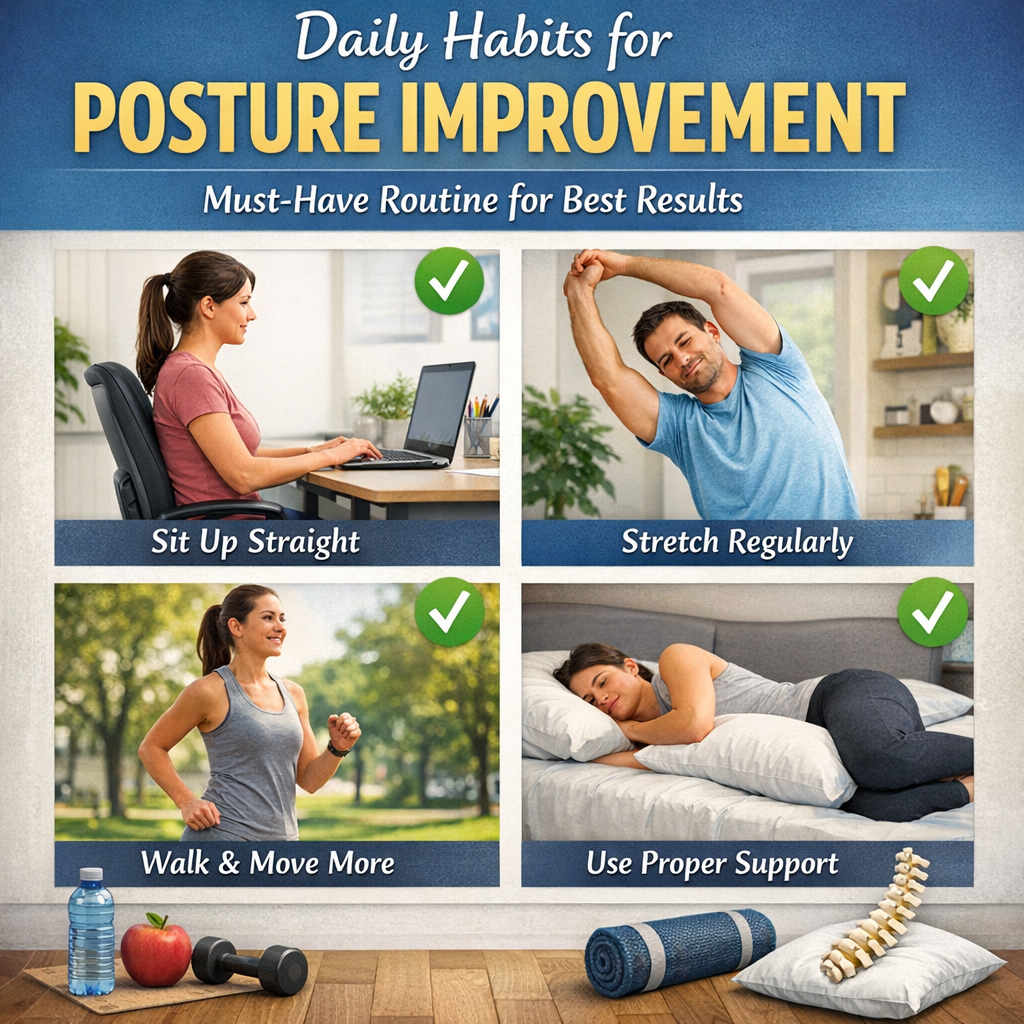
Posture is often overlooked until pain or discomfort sneaks in. Poor posture leads to muscle imbalances, spinal misalignment, and strain on joints, which can result in headaches, neck pain, and fatigue. The good news? Improving posture doesn’t require drastic changes or expensive treatments. Simple, intentional daily habits can strengthen key muscles, retrain your body’s alignment, and cultivate mindfulness about how you hold yourself throughout the day.
By making these habits part of your everyday routine, you’ll notice improvements in your body mechanics, breathing efficiency, and even mood. Consistency is the key—just like any other fitness goal, posture correction requires regular practice.
Establishing a Posture Improvement Routine: Core Elements
A successful posture improvement routine incorporates awareness, strengthening exercises, stretching, and ergonomic adjustments. Here are some must-have daily habits for posture improvement that you can integrate seamlessly:
1. Mindful Posture Checks
The first step is increasing your awareness. Set reminders throughout the day—every hour or so—to pause and assess your posture. Are your shoulders rounded? Is your lower back slumped? Are your ears aligned with your shoulders? Correct your position so that your spine is neutral, your shoulders relaxed but not slouched, and your chin slightly tucked. Over time, this habit trains your mind and body to maintain good posture automatically.
2. Desk and Workstation Ergonomics
The typical workday often fuels poor posture habits. To combat this, adjust your workstation so your screen is at eye level, feet flat on the ground, and elbows at about a 90-degree angle. Use ergonomic chairs or add lumbar support cushions to maintain the natural curve of your spine. Proper workstation setup is a critical daily habit for posture improvement, especially for those who spend long hours seated.
3. Incorporate Strength-Building Exercises
Strong muscles provide the foundation for good posture. Focus on exercises that target your core, upper back, and shoulders. Planks, bridges, and back extensions are excellent for core strength, while rows and scapular squeezes help stabilize your upper back. Including just 10–15 minutes of these exercises in your daily routine significantly supports spinal alignment and prevents slouching.
4. Stretch Tight Muscle Groups
Tight muscles can pull your body out of alignment. The chest muscles, hip flexors, and hamstrings are common culprits that tighten with sedentary lifestyles. Incorporate stretching routines such as doorway chest stretches, hip flexor lunges, and seated hamstring stretches to increase flexibility and reduce tension. Stretching before or after exercise, or even during breaks, helps maintain mobility which is crucial for posture improvement.
5. Practice Posture-Friendly Activities
Activities like yoga, Pilates, and Tai Chi emphasize body awareness, flexibility, and balance—all key factors in posture correction. Even a daily 10-minute yoga flow focusing on spinal alignment and breathing can promote better posture habits that last throughout the day.
6. Pay Attention to Footwear and Walking
Your posture starts from the ground up. Wearing supportive, well-fitting shoes can impact your entire alignment. Avoid high heels for prolonged periods, and choose footwear that provides arch support. When walking, aim to keep your chin parallel to the ground and shoulders relaxed. A posture-friendly gait reduces strain on your back and joints.
7. Maintain Proper Sleeping Posture
Your sleeping position sets the tone for your spine each morning. Sleep on your back or side with appropriate pillow support to keep your neck aligned with your spine. Avoid stomach sleeping, which tends to twist the neck awkwardly. A quality mattress that supports your body contours plays a vital role in maintaining spinal health overnight.
Tracking Progress and Staying Motivated
Like any lifestyle change, sticking to a daily posture improvement routine can be challenging at first. Use tools like apps or posture trackers to remind you to check in and make adjustments throughout the day. Take photos or keep a journal to document your posture progress over weeks and months—it’s motivating to see how minor adjustments evolve into lasting improvements.
Celebrate milestones such as reduced back pain or improved confidence in your posture. Remember that setbacks are natural; the goal is consistent gradual progress rather than perfection.
Conclusion
Incorporating daily habits for posture improvement into your lifestyle is one of the smartest and easiest ways to enhance your health and well-being. By focusing on mindful posture checks, ergonomic setup, exercise, stretching, and posture-conscious activities, you build a resilient, aligned body that supports your busy life. With patience and persistence, your posture improvement routine will deliver visible and tangible benefits—making you stand taller, feel stronger, and move more freely every day.