Best Tips for Desk Exercises: Must-Have Easy Moves for Health
In today’s world of remote work and long hours spent sitting in front of a computer, incorporating movement throughout the day has become essential. The best tips for desk exercises focus on simple, effective movements that can be performed without leaving your workspace. These exercises help reduce stiffness, improve circulation, and boost overall well-being, making them a valuable addition to your daily routine.
Why Desk Exercises Matter
Sitting for prolonged periods is linked to numerous health issues, including poor posture, back pain, and increased risk for cardiovascular problems. Desk exercises are designed to counteract these negative effects by promoting movement and flexibility. They provide an accessible way to stay active without disrupting work and can easily be integrated into even the busiest schedules.
Best Tips for Desk Exercises: How to Start
Before diving into the exercises themselves, keep a few important desk exercises tips in mind:
– Set Regular Reminders: Stand up and move every 30 to 60 minutes. Use phone alarms or computer notifications to remind yourself.
– Create a Comfortable Space: Ensure your chair and desk support good posture to avoid injury during exercises.
– Start Slow: If you’re new to desk exercises, begin with gentle movements and gradually increase intensity.
– Stay Consistent: Consistency is key. Aim to perform exercises daily or multiple times a week for best results.
By following these guidelines, you can maximize the benefits of your desk exercise routine.
Easy Desk Exercises to Boost Your Health
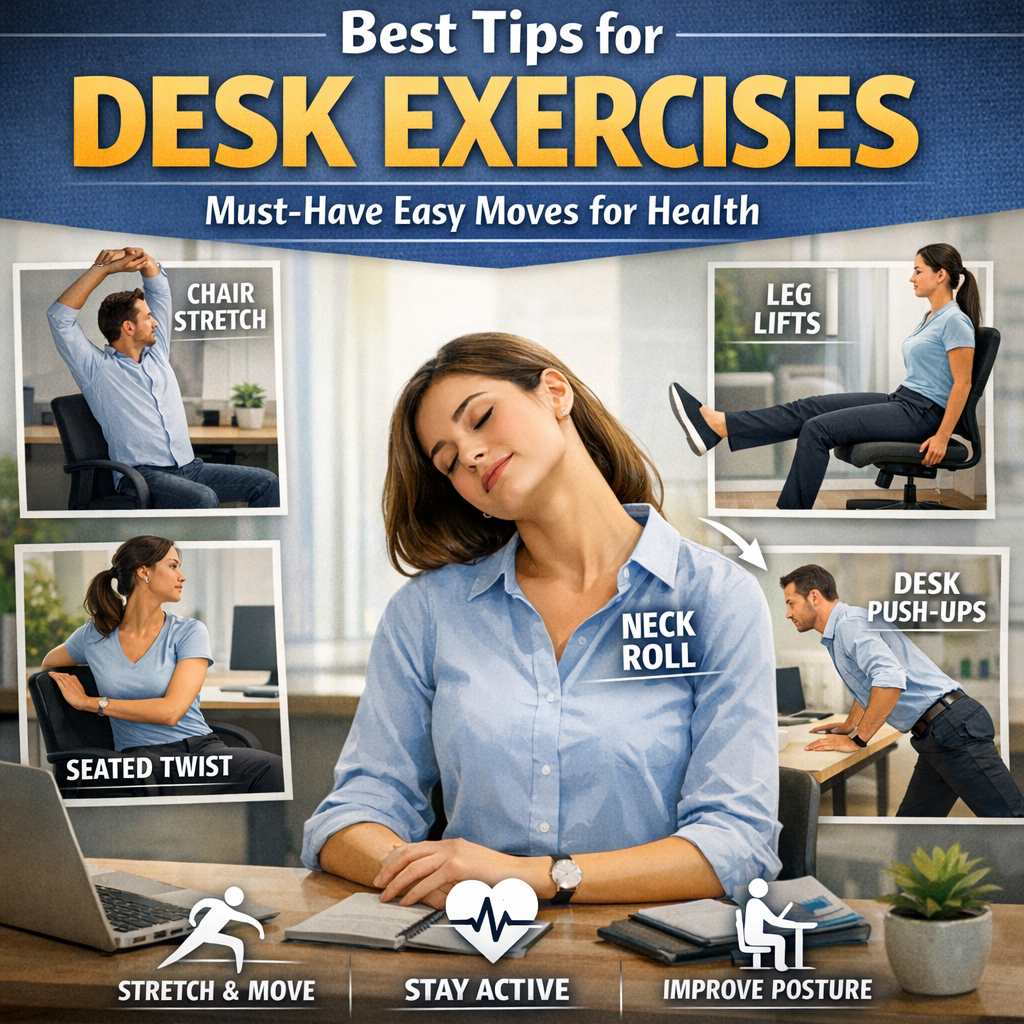
1. Seated Leg Raises
This straightforward move activates your lower body and helps improve circulation without standing up.
– Sit upright with your back straight.
– Extend one leg straight out, hold for a few seconds, and then lower it without letting it touch the floor.
– Repeat 10 to 15 times with each leg.
2. Neck Stretches
Neck pain often results from poor posture during long computer sessions. Neck stretches can relieve tension and promote flexibility.
– Slowly tilt your head toward one shoulder and hold for 15 seconds.
– Return to center and repeat on the other side.
– Perform 3 sets for each side.
3. Seated Spinal Twist
This exercise helps counteract the stiffness caused by sitting and improves spinal mobility.
– Sit upright in your chair.
– Place your right hand on the back of the chair and twist your torso to the right.
– Hold for 15 to 30 seconds, return to center, and repeat on the left side.
4. Wrist and Finger Stretches
Typing and using a mouse for extended periods often lead to wrist strain or carpal tunnel syndrome.
– Stretch your fingers wide and then clench fists tightly several times.
– Extend your arm and gently pull back your fingers with the opposite hand to stretch the wrist.
– Hold each stretch for 15 seconds and repeat a few times throughout the day.
5. Shoulder Rolls
Relax tight shoulders by performing shoulder rolls periodically.
– Sit or stand tall.
– Roll your shoulders forward in a circular motion 10 times.
– Reverse and roll your shoulders backward 10 times.
Incorporating Movement Into Your Workday
Desk exercises become even more effective when combined with other healthy habits:
– Take walking breaks: Stand up and walk for a few minutes every hour to give your muscles a break.
– Practice deep breathing: Deep breaths can help reduce stress and improve focus.
– Opt for a standing desk: Alternating between sitting and standing can reduce fatigue and increase energy.
The Science Behind Desk Exercises’ Benefits
Studies have shown that short bouts of movement during the workday can enhance mood, reduce fatigue, and improve cognitive function. Simple exercises done at your desk promote blood flow, which increases oxygen delivery to the brain and muscles. This results in better concentration, decreased discomfort, and overall improved productivity.
Tips for Staying Motivated
– Set clear goals: Whether it’s reducing back pain or boosting energy, having a goal helps maintain motivation.
– Keep exercises visible: Place reminders or diagrams near your workspace as a prompt.
– Mix it up: Vary your routine to avoid boredom and challenge different muscle groups.
– Involve coworkers: Encourage team members to join in for accountability and social support.
Final Thoughts on Desk Exercises Tips
Implementing desk exercises into your daily routine is a smart way to protect your health amid sedentary work habits. The best tips for desk exercises emphasize simplicity, regularity, and safety, making it easy to keep moving no matter how busy your day gets. By committing to these easy moves, you’ll enjoy less discomfort, more energy, and a healthier workday overall. Start small, stay consistent, and let your body thank you!