Stretching Routines Checklist: Ultimate Must-Have Plan for Effortless Flexibility
Improving your flexibility doesn’t have to be complicated or overwhelming, especially if you follow a well-crafted stretching routines checklist designed for success. Whether you’re an athlete, a busy professional, or someone looking to enhance overall mobility, having a clear, easy-to-follow stretching plan is essential. With the right stretching routines plan, you can make progress confidently and enjoy the long-term benefits of greater agility, reduced injury risk, and enhanced muscle performance.
In this article, we’ll break down the ultimate stretching routines checklist to help you create effortless flexibility building into your daily or weekly wellness schedule.
Why You Need a Stretching Routines Checklist
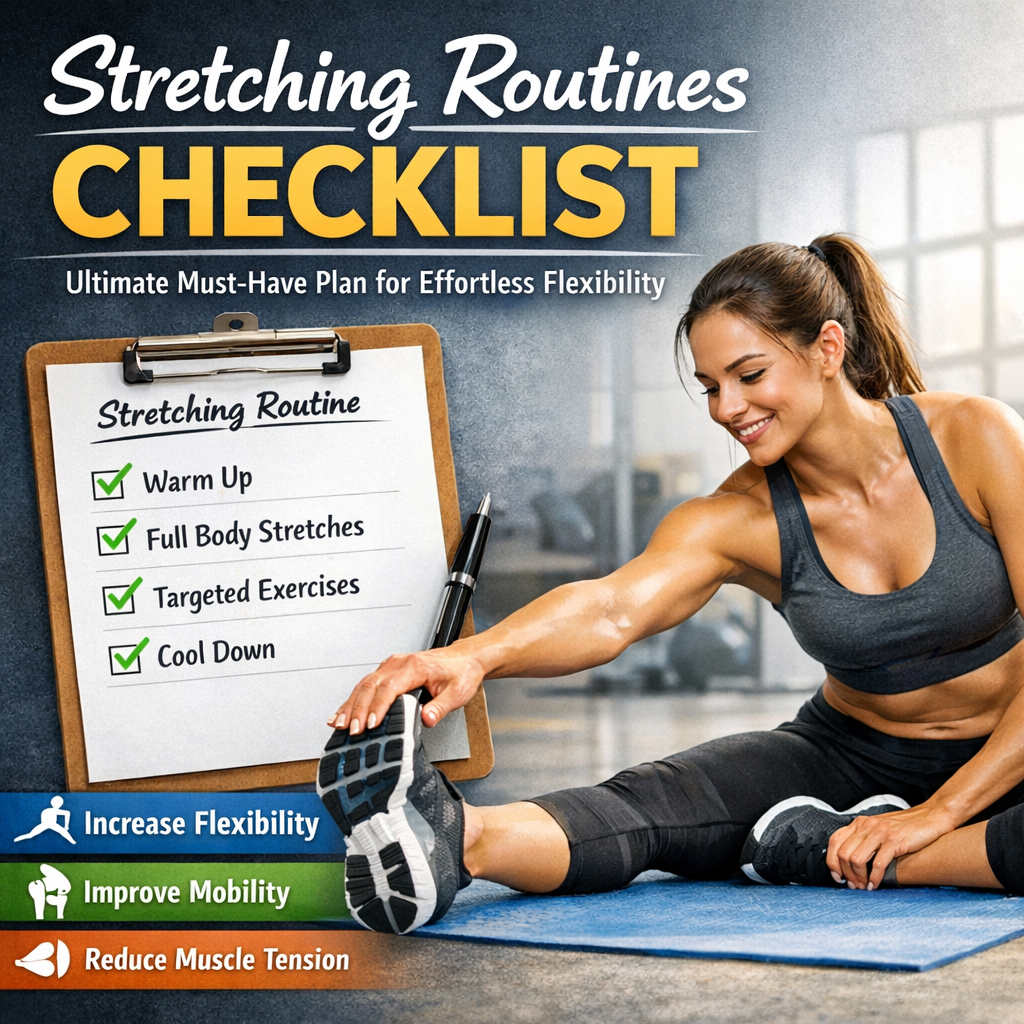
Flexibility is a key component of overall fitness that often gets overlooked. People tend to jump between exercises without a clear strategy, leading to missed muscle groups or inconsistent results. A stretching routines checklist ensures:
– Consistency: Having a plan keeps you regular and accountable.
– Balance: Targets all major muscle groups to prevent imbalances.
– Progress tracking: Helps you monitor improvements and adjust difficulty.
– Injury prevention: Proper warm-up and cool-down stretches minimize strains.
By using a checklist, your stretching becomes structured and purposeful, simplifying your path to better flexibility.
Elements of an Effective Stretching Routines Plan
Before diving into the stretches themselves, it’s important to understand the core elements of an effective plan. Your stretching routines plan should include:
1. Warm-Up Phase
Your muscles and joints need to be warmed up before stretching to prevent injury. Simple activities like jogging in place, jumping jacks, or brisk walking for 5 to 10 minutes increase blood flow and prepare your body.
2. Dynamic Stretching
This involves controlled, active movements through a joint’s full range of motion — excellent as part of a warm-up. For example, leg swings, arm circles, and torso twists increase mobility and activate muscles.
3. Static Stretching
Performed after your workout or warm-up, static stretches involve holding a specific pose for 15-60 seconds, allowing muscles to lengthen and relax. This is where most traditional stretches like hamstring or calf stretches come into play.
4. Frequency and Duration
Aim for 3-5 stretching sessions per week, with each routine lasting 10-20 minutes. Holding each stretch for 30 seconds can maximize flexibility gains.
The Ultimate Stretching Routines Checklist
To help you kickstart or enhance your flexibility journey, here is a comprehensive stretching routines checklist covering all major areas:
Upper Body Stretches
– Neck Stretch: Tilt your head to each side, holding for 20-30 seconds to release tension.
– Shoulder Stretch: Cross one arm over your chest and use the other arm to deepen the stretch.
– Triceps Stretch: Reach one arm overhead, bending at the elbow, and press down gently with the opposite hand.
– Chest Opener: Clasp your hands behind your back and gently lift to stretch the chest muscles.
Lower Body Stretches
– Hamstring Stretch: Sit on the ground and reach toward your toes, keeping legs straight.
– Quadriceps Stretch: Standing on one leg, hold your other foot behind you to stretch the front of the thigh.
– Calf Stretch: Place your toes against a wall and press your heel down for a deep calf stretch.
– Hip Flexor Stretch: Take a lunge position and push hips forward to stretch the hip flexor.
Core and Back Stretches
– Cat-Cow Stretch: On all fours, alternate arching and rounding your back to mobilize the spine.
– Seated Spinal Twist: Sit cross-legged and gently twist your torso to each side.
– Child’s Pose: Sit back on your heels with arms extended forward to elongate the back muscles.
Tips for Success With Your Stretching Routines Plan
– Breathe deeply: Maintain steady breathing during stretches to improve relaxation and oxygen flow.
– Avoid bouncing: Stretch smoothly to prevent muscle strain or injury.
– Listen to your body: Stretching should feel good; push gently but don’t force.
– Stay consistent: Flexibility improvements take time, so be patient and keep at it.
Incorporating Stretching Into Your Daily Routine
Making stretching a habit doesn’t require hours of your day. Incorporate it into moments such as:
– After waking up to relieve morning stiffness.
– As a midday break from sitting at your desk.
– Following exercise to aid recovery.
– Before bedtime to relax muscles and prepare for restful sleep.
By viewing your stretching routines checklist as a simple, daily self-care habit rather than a chore, you’ll find it easier to maintain and enjoy lasting results.
Final Thoughts
An effective stretching routines plan is your roadmap to effortless flexibility. With a clear checklist in hand, you can ensure you’re targeting all areas of your body, preventing injury, and enhancing your overall mobility. Remember, flexibility isn’t built overnight—it’s the consistent, mindful routine that yields the best long-term benefits.
Start today, use this checklist, and watch your body transform into a more agile, resilient, and comfortable version of itself.