Stretching routines mistakes can significantly impact the effectiveness of your flexibility and mobility exercises. Whether you’re an athlete, someone recovering from an injury, or simply trying to improve your overall physical health, getting your stretching routine right is crucial. Many people unknowingly make common errors that reduce the benefits or even cause harm. Understanding these pitfalls and learning practical stretching routines tips can help you maximize your efforts and achieve the best results safely.
Common Stretching Routines Mistakes to Avoid
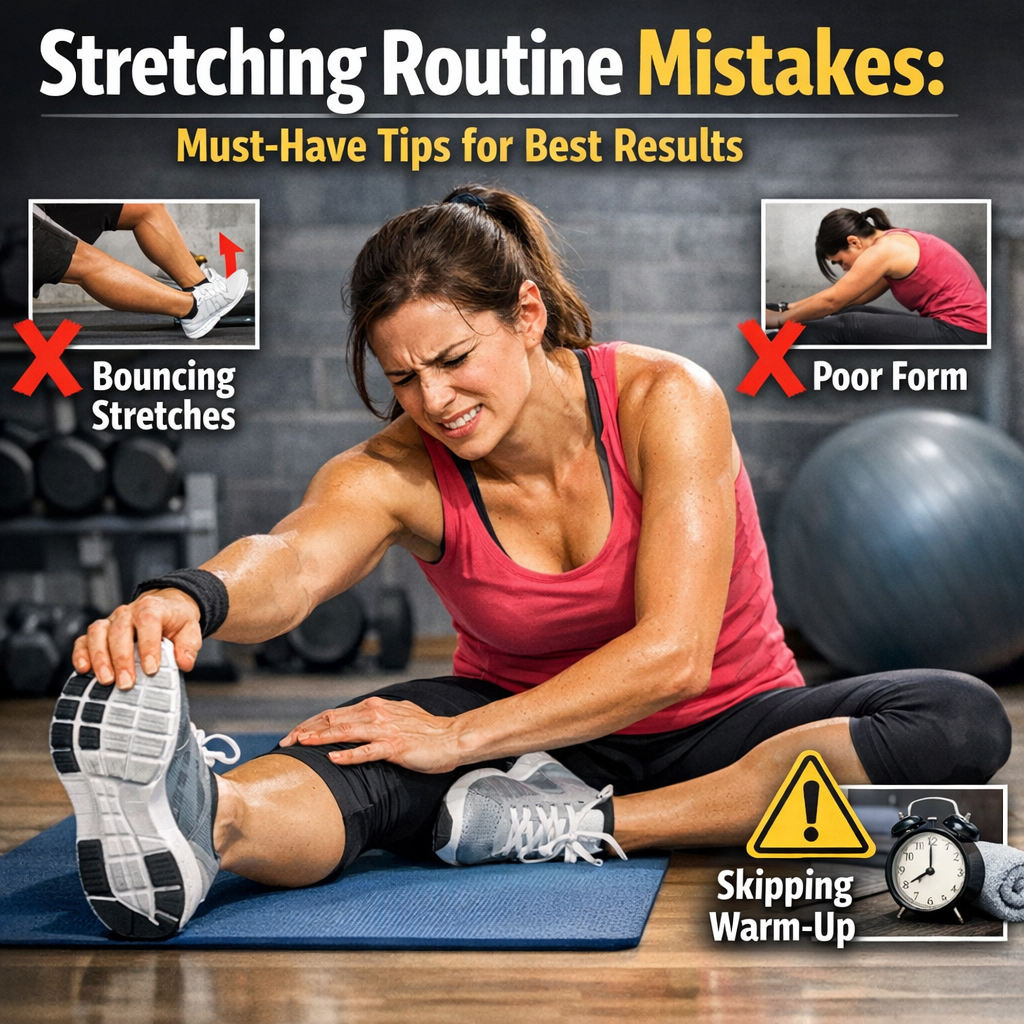
One of the most frequent stretching routines mistakes is rushing through the stretches. Stretching requires time and patience, and hurrying can lead to insufficient muscle elongation or even injury. Instead of quickly bouncing through movements, it is essential to hold each position steadily, allowing muscles to gradually lengthen.
Another mistake is neglecting the proper warm-up before stretching. Stretching cold muscles increases the risk of strains and tears. A light aerobic activity — such as walking or jogging for five to ten minutes — raises muscle temperature, making them more pliable and ready for stretching.
People often forget to target all the relevant muscle groups, focusing only on areas they feel tightness. However, a well-rounded routine incorporates stretches for the entire body, as imbalance in flexibility can cause posture problems and increased injury risk. Developing a balanced regimen ensures comprehensive mobility improvement.
Additionally, overstretching is a common error. Pushing muscles beyond their natural limits, especially without correct form, can lead to microtears or sprains. It’s important to find the appropriate intensity level where you feel tension but no sharp pain. Progress should be gradual and consistent.
Incorporating Effective Stretching Routines Tips
To avoid these mistakes and get the most from your stretching exercises, consider the following stretching routines tips:
1. Warm Up Before Stretching
Begin every session with a five to ten-minute warm-up to elevate muscle temperature. Activities like brisk walking, cycling, or jumping jacks increase blood flow and muscle elasticity, setting the stage for safe and effective stretches.
2. Use Proper Form and Technique
Maintaining correct posture during stretching prevents injury and targets muscles efficiently. For example, when doing hamstring stretches, avoid locking your knees or rounding your back excessively. If unsure about technique, consulting a professional or following guided videos can help.
3. Hold Stretches for an Adequate Duration
Hold each stretch for at least 15 to 30 seconds. Holding the position allows muscles and connective tissues to lengthen gradually. Avoid bouncing or sudden movements, as these can strain muscles rather than relax them.
4. Breathe Deeply and Relax Your Body
Deep, controlled breathing during stretches helps the muscles relax and improves oxygen flow. Focus on slow inhales and exhales, releasing tension with each breath. This can enhance the stretch’s effectiveness and promote relaxation.
5. Stretch Consistently and Progress Gradually
Flexibility improvements take time and demand regular practice. Aim for stretching sessions about three to five times per week. Gradually increase intensity and range of motion without forcing your body, respecting its natural limits.
6. Balance Stretching Between Muscle Groups
Incorporate stretches for major muscle groups, including calves, quadriceps, hamstrings, hip flexors, back, shoulders, and neck. Balanced flexibility supports better posture and reduces the risk of muscle imbalances causing pain or injuries.
Why Avoiding Stretching Routines Mistakes Matters
Ignoring common stretching routines mistakes can result in setbacks such as muscle strains, joint pain, and diminished mobility. Ineffective stretching may also hinder your athletic performance or slow recovery after exercise or injury. Properly executed stretching increases blood circulation, enhances muscle coordination, reduces stiffness, and promotes faster healing.
For those with specific conditions like chronic pain or arthritis, customized stretching routines based on professional guidance are essential. Self-assessment and awareness of your body’s responses help prevent accidental aggravation of existing issues.
Conclusion
Mastering your stretches requires more than just effort; it demands an understanding of the most common stretching routines mistakes and how to avoid them. By warming up, maintaining proper form, holding stretches effectively, breathing deeply, and practicing consistency, you can make meaningful progress in your flexibility and injury prevention goals. Use these stretching routines tips to craft a safe, balanced, and enjoyable routine that supports your overall well-being and physical fitness journey.