What to Know About Core Exercises: The Ultimate Must-Have Core Exercises Guide
When it comes to fitness and overall body strength, what to know about core exercises is essential for anyone looking to improve stability, posture, and functional movement. The core muscles are the central powerhouse of the body, encompassing not just the abs but also the muscles in your lower back, hips, and pelvis. Strengthening these muscles can enhance athletic performance, reduce the risk of injury, and support daily activities. This comprehensive guide will unravel everything you need to understand about core training and introduce a variety of effective exercises to help you build a strong, resilient midsection.
Why Core Exercises Matter
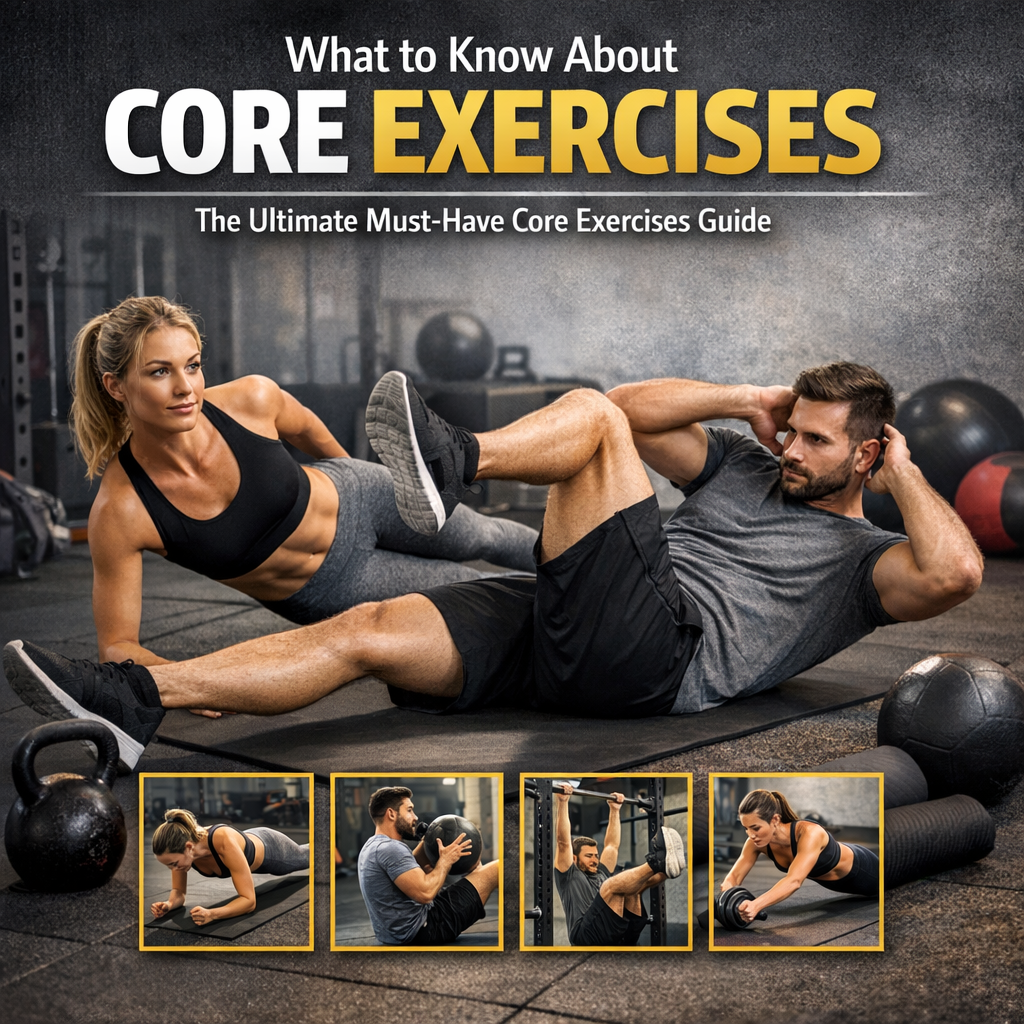
Core exercises do more than just give you defined abs. The core stabilizes your entire body, providing a solid foundation for all movements—whether you’re lifting weights, running, or simply walking. A strong core helps improve balance, supports your spine, and alleviates pressure on your lower back, which is often a major source of pain.
In addition, core strength plays a crucial role in injury prevention. Weak core muscles can lead to poor posture and movement patterns, increasing the likelihood of strains and other injuries. By incorporating targeted core work into your fitness routine, you enhance muscular coordination and endurance.
What to Know About Core Exercises: The Basics of Core Anatomy
Understanding the anatomy of your core is fundamental to effective training. The core is comprised of several key muscle groups:
– Rectus Abdominis: Often called the “six-pack,” this muscle runs along the front of your abdomen and helps flex your spine.
– Transverse Abdominis: The deepest abdominal muscle, wrapping around your torso like a corset, providing spine stability.
– Obliques (Internal and External): Located on the sides of your abdomen, these muscles assist with twisting and side bending.
– Erector Spinae: A group of muscles running along the spine that helps with back extension and posture maintenance.
– Multifidus: Small muscles deep in your back that stabilize the vertebrae.
– Pelvic Floor Muscles and Diaphragm: These contribute to core stability and control intra-abdominal pressure.
Since the core is a complex system, focusing on a range of exercises that target each of these muscles is the best approach to a well-rounded program.
Core Exercises Guide: Top Exercises to Include in Your Routine
This core exercises guide focuses on movements that target all the key muscles for balanced strength. Here are some of the most effective and accessible exercises:
1. Plank Variations
The plank is a classic isometric exercise that recruits multiple core muscles simultaneously. Begin with the standard forearm plank, keeping your body in a straight line from head to heels. Hold for 20-30 seconds, progressively increasing your hold time.
– Side Planks: These focus on the obliques and help improve lateral stability.
– Plank with Leg Lift: Adding leg lifts increases the challenge and engages your glutes.
2. Dead Bug
This exercise is excellent for engaging the transverse abdominis and improving coordination. Lying on your back, extend your arms and legs toward the ceiling. Slowly lower one leg and the opposite arm toward the floor while keeping your back flat. Return to the start and repeat on the opposite side.
3. Bird Dog
A great movement for balance and spinal stability. From a quadruped position, extend one arm forward and the opposite leg backward while keeping your core tight and your spine neutral. Alternate sides while maintaining control.
4. Russian Twists
For targeting the obliques, sit on the floor with your knees bent and feet slightly off the ground (for an added challenge). Lean back slightly and twist your torso side to side, holding a medicine ball or weight for resistance if desired.
5. Glute Bridge
Although primarily a glute exercise, the glute bridge also activates the lower back and core stabilizers. Lie on your back with knees bent, feet hip-width apart. Lift your hips off the ground by squeezing your glutes and engaging your core.
Incorporating Core Exercises Into Your Fitness Plan
Effective core training should balance intensity with proper recovery. Aim to include 2-3 core-focused workouts per week, allowing muscles time to repair and strengthen. Start with basic exercises to build foundational strength before progressing to more advanced variations.
Additionally, remember that core exercises are most beneficial when combined with full-body workouts, including cardiovascular training, strength training, and flexibility work. Maintaining proper nutrition and hydration will also support muscle growth and overall fitness.
Common Mistakes to Avoid
Even the best core exercises can become ineffective or harmful if performed incorrectly. Here are some pitfalls to watch out for:
– Overarching the lower back: This puts undue stress on the spine and reduces core engagement.
– Holding your breath: Remember to breathe steadily to maintain oxygen flow and reduce tension.
– Using momentum instead of controlled movements: This limits muscle activation and increases injury risk.
– Neglecting the posterior chain: Focusing only on the abs and ignoring back muscles leads to muscular imbalances.
Final Thoughts
Knowing what to know about core exercises equips you with the insight to build a strong, balanced midsection that supports your everyday activities and athletic pursuits. This core exercises guide has introduced fundamental concepts and proven exercises that you can integrate starting today. Remember that consistency, proper form, and gradual progression are key to reaping the full benefits of core training.
By adopting a targeted, comprehensive approach to your core workout regimen, you’ll develop enhanced stability, reduced pain, and improved overall mobility—setting the foundation for better health and fitness in the long run.