Core Exercises Checklist: Must-Have Plan for Best Results
When it comes to building a strong and stable body, a well-rounded core exercises checklist is essential. The core is the foundation of nearly all physical activity, supporting your spine, improving posture, and enhancing overall athletic performance. Whether you’re an athlete, a fitness enthusiast, or simply looking to improve your daily functional strength, having a structured core exercises plan can make all the difference.
In this article, we will dive into the critical components of a core exercises checklist, explore the types of exercises you should include, and share tips for maximizing your results. By the end, you’ll be equipped with a practical and effective blueprint to strengthen your midsection and optimize your workouts.
—
Why You Need a Core Exercises Checklist
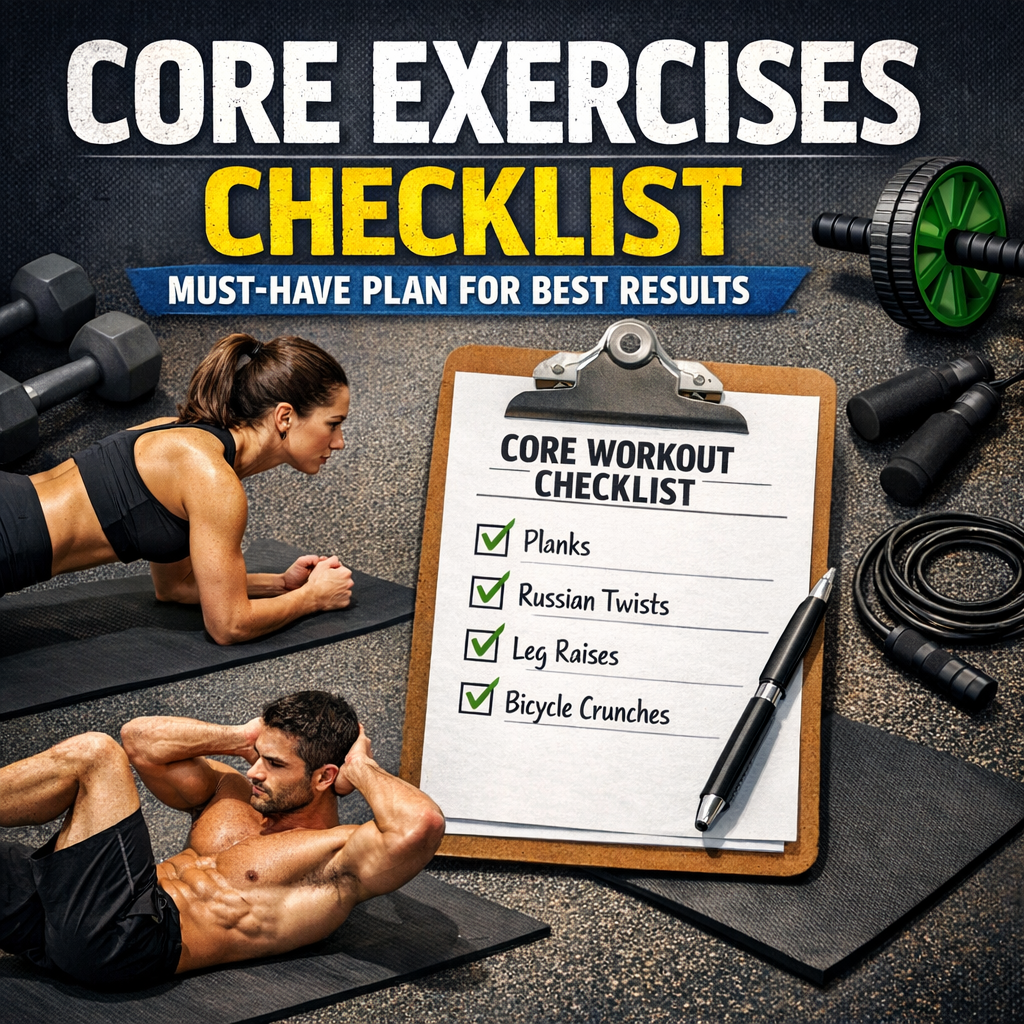
The core comprises muscles in your abdomen, lower back, hips, and pelvis. Despite common misconceptions, core training doesn’t mean just doing endless crunches or sit-ups. It involves targeting a variety of muscles to create balanced strength and stability.
A core exercises checklist helps you:
– Ensure comprehensive coverage of key muscle groups
– Maintain proper workout variety to prevent plateaus
– Track progress and stay consistent with your routine
– Reduce the risk of injury through balanced training
By following a deliberate and planned approach, your efforts will yield more noticeable improvements in strength, stability, and overall fitness.
—
Building Your Core Exercises Plan: Key Elements to Include
A solid core exercises plan should include a mix of movements that target different parts of the core. Here’s a breakdown of the must-have exercises:
1. Planks: The Ultimate Core Stabilizer
Planks are fundamental to any core workout because they engage the entire midsection, including the transverse abdominis, rectus abdominis, and obliques. Aim for various plank variations such as forearm plank, side plank, and reverse plank. Hold each position for 20 to 60 seconds, gradually increasing over time.
2. Russian Twists: Engage the Obliques
To work the muscles on the sides of your torso, Russian twists are highly effective. This rotational movement improves your ability to twist and stabilizes your pelvis, which is crucial for sports and daily activities.
3. Bicycle Crunches: Dynamic Core Activation
Unlike traditional crunches, bicycle crunches engage your entire core dynamically. This exercise targets both the upper and lower abs plus engages the obliques, contributing to a defined midsection.
4. Leg Raises: Strengthen Lower Abs
Many people overlook training the lower abs, but leg raises are a great exercise for this area. They build strength in the lower abdominal muscles and hip flexors, important for movements like jumping and running.
5. Bird-Dogs: Improve Balance and Coordination
Bird-dogs activate your lower back and core stabilizers while improving balance. This exercise is beneficial for spinal health and reduces the risk of lower back pain.
6. Dead Bug: Core Control and Stability
Dead bugs help develop fine motor control in the core muscles and encourage proper breathing and spine alignment. This move is suitable for beginners and advanced exercisers alike.
—
How to Structure Your Core Exercises Plan for Best Results
To create an effective routine using your checklist, consider the following structure:
– Warm-up: Begin with 5-10 minutes of light cardio and dynamic stretching to prepare the muscles and prevent injury.
– Workout Frequency: Incorporate core exercises 3 to 4 times per week. Unlike heavy weight training, the core can generally handle more frequent work.
– Set and Reps: Perform 2 to 4 sets of each exercise, aiming for 10 to 20 reps or a duration of 20 to 60 seconds depending on the move.
– Progression: Gradually increase difficulty by extending hold times, adding resistance, or trying more challenging variations.
– Cooldown: Finish with stretching exercises focusing on the abdominal and lower back muscles to promote flexibility and recovery.
—
Tips to Maximize the Effectiveness of Your Core Exercises Plan
– Focus on Form: Correct form minimizes injury risk and maximizes muscle engagement. Avoid rushing through exercises.
– Incorporate Breathing Techniques: Proper breathing stabilizes the core and enhances exercise performance.
– Mix It Up: Changing exercise types and intensities helps prevent plateaus and keeps workouts interesting.
– Combine with Full-Body Training: While core exercises target your midsection, integrating them into full-body workouts boosts overall functional strength.
– Stay Consistent: Core strength improves gradually over time. Stick to your plan even when results seem slow at first.
—
Conclusion
A comprehensive core exercises checklist forms the backbone of any successful fitness journey aimed at improving strength, stability, and overall health. By designing a thoughtful core exercises plan that incorporates a variety of movements and adheres to proper structure and technique, you can unlock your body’s potential to support better movement and reduce injury risk.
Start building your checklist today, and watch as your core transforms into a powerhouse that supports everything you do—on and off the gym floor. Remember, strong cores lead to stronger lives.