Core Exercises Mistakes: Stunning Tips to Avoid Common Errors Effortlessly
Core exercises are an essential part of any fitness routine, helping to build strength, improve stability, and support overall body function. However, many people unknowingly make core exercises mistakes that can limit their progress or even cause injury. Understanding these common errors and learning how to avoid them can elevate your workout efficiency and help you achieve better results. In this article, we’ll explore some of the most frequent core exercises mistakes and provide stunning core exercises tips to help you perform these moves with proper form and maximum benefit.
Common Core Exercises Mistakes to Watch Out For
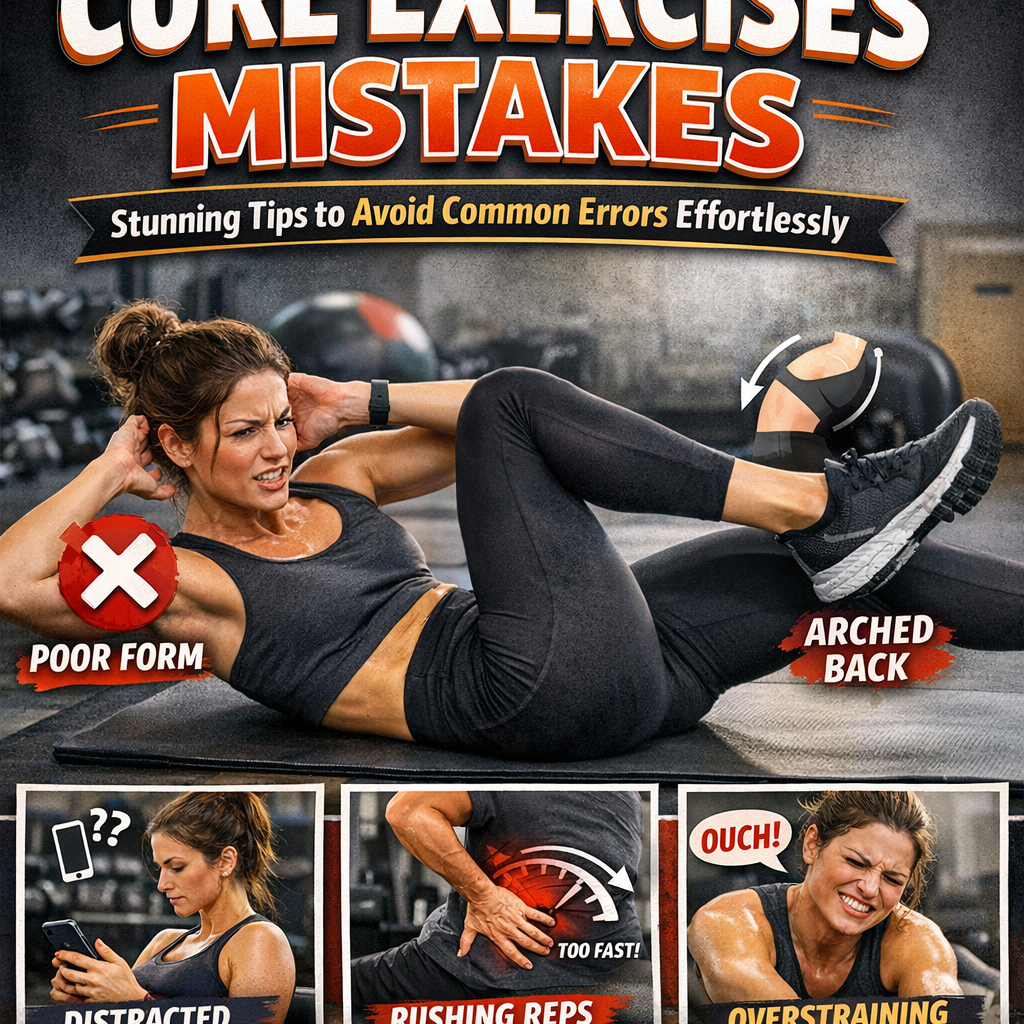
Before diving into corrective measures, let’s identify some core exercises mistakes that are often overlooked:
1. Poor Posture and Alignment
One of the biggest mistakes is neglecting proper posture during core workouts. Slouching or arching your back excessively can reduce the effectiveness of the exercise and strain your spine. For example, while doing planks or crunches, a rounded back or sinking hips can lead to discomfort or injury.
2. Overusing the Neck and Hip Flexors
Many beginners rely too much on neck muscles when performing crunches or on hip flexors in exercises like leg raises. This not only reduces the engagement of the core muscles but can cause neck pain and hip discomfort.
3. Holding Your Breath
Breathing may seem secondary during workouts, but holding your breath can increase intra-abdominal pressure, raise blood pressure, and reduce oxygen flow to muscles, thereby decreasing exercise performance and safety.
4. Rushing Through Repetitions
Speeding through reps without control undermines the benefits of core exercises. Rapid movements often rely on momentum rather than muscle strength, compromising form and making injuries more likely.
5. Neglecting Variety and Balance
Focusing too much on one type of exercise, such as crunches, while ignoring other core muscles (like the transverse abdominis or obliques), limits core strength development and increases the risk of imbalances.
Core Exercises Tips to Avoid These Mistakes Effortlessly
Maintain Proper Form and Alignment
Always prioritize form over the number of repetitions. When doing any core exercise, keep your spine neutral and your shoulders relaxed but stable. For example, during planks, your body should form a straight line from your head to your heels. Using a mirror or filming yourself can help spot alignment errors.
Engage the Core, Not the Neck or Hips
Focus on initiating your core muscles before moving. During crunches, tuck your chin slightly and lift your shoulders using your abdominals, not your neck. For leg raises, try to keep your lower back pressed into the floor to prevent hip flexor dominance.
Practice Proper Breathing Techniques
Inhale deeply before starting the exertion phase and exhale slowly as you perform the movement. Controlled breathing supports core engagement and ensures your muscles receive adequate oxygen.
Control the Pace of Your Movements
Slow down your repetitions to maximize muscle activation. For instance, take 2-3 seconds to lift during a crunch and 2-3 seconds when lowering back down. This time-under-tension approach can increase the workout’s effectiveness and reduce momentum-driven errors.
Incorporate a Diverse Range of Core Exercises
To build a strong, balanced core, include exercises targeting different muscle groups. Planks, Russian twists, bird dogs, dead bugs, and stability ball exercises are great complements to traditional crunches. Varying your routine prevents plateaus and helps develop functional core strength.
Use Modifications When Needed
Core exercises can be adjusted for different fitness levels. Beginners might start with modified planks on their knees or dead bugs with bent knees. Listening to your body and performing easier variations when necessary minimizes the risk of injury.
Additional Tips for Long-Term Core Strength Success
Warm-Up and Stretch
A gentle warm-up introduces blood flow to your muscles and prepares your body for exercise. Incorporate dynamic stretches like torso twists and side bends to prime your core.
Consistency Is Key
Perform core workouts 2-3 times per week, giving your muscles time to recover while steadily improving strength and endurance.
Avoid Overtraining
Too much core work can lead to muscle fatigue or strain. Balance core exercises with other body training and rest days.
Prioritize Functional Movements
Incorporate core exercises that mimic real-life activities or sports movements to enhance functional strength and prevent injury.
Final Thoughts
Avoiding core exercises mistakes is crucial to maximizing the benefits of your workouts and protecting your body. By maintaining proper form, breathing correctly, controlling your pace, and targeting a range of core muscles, you can effortlessly enhance your training sessions. Incorporate these stunning core exercises tips into your routine to enjoy a stronger, more stable, and injury-free core for life. Remember, quality always beats quantity when it comes to effective core training.