Healthy Snacks Mistakes: Must-Have Tips for Effortless Healthy Eating
Healthy snacks mistakes can sabotage your efforts to maintain a balanced diet, even when you think you’re making good choices. Snacking is an essential part of daily nourishment, providing energy between meals and helping to curb overeating. However, many people unknowingly fall into common pitfalls that turn a seemingly nutritious snack into a calorie bomb or nutrient void. Understanding these mistakes and learning practical healthy snacks tips can empower you to snack smarter and feel better throughout the day.
Common Healthy Snacks Mistakes to Avoid
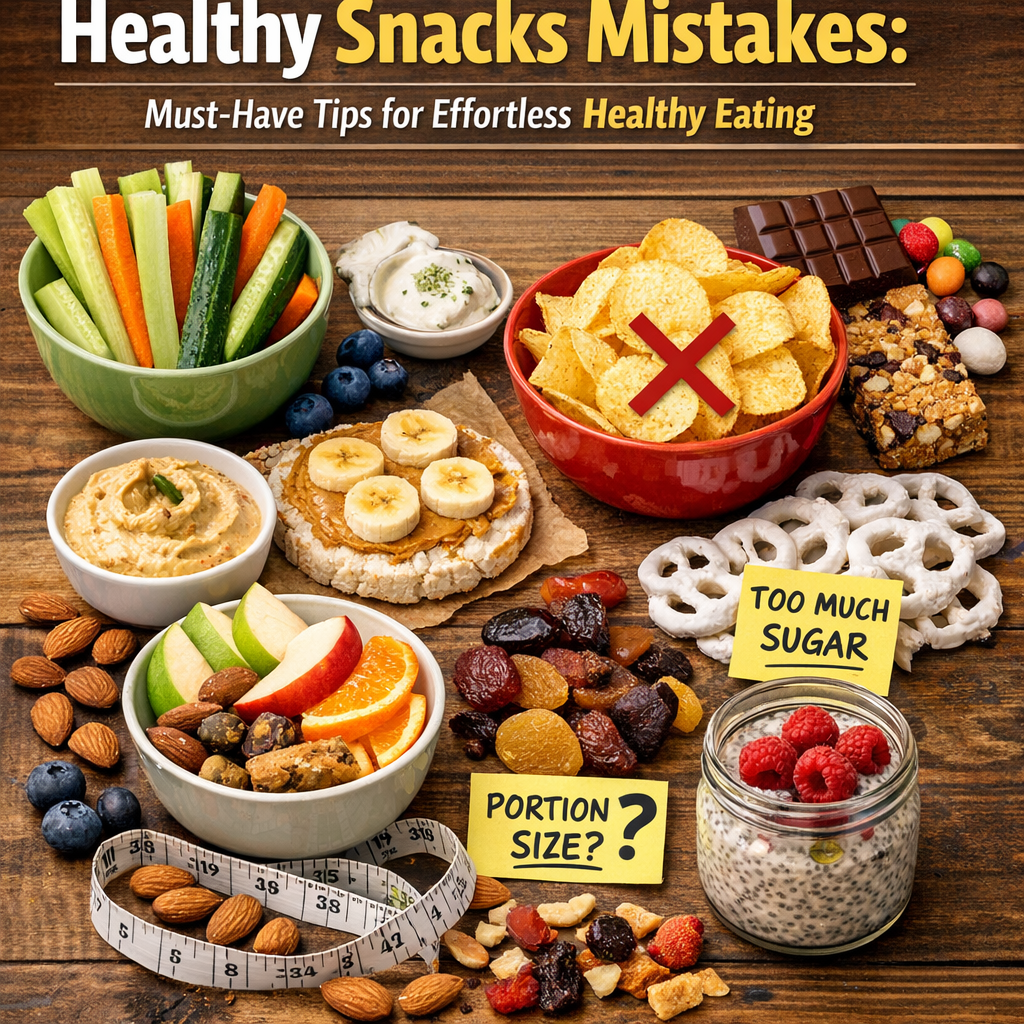
Many individuals approach snacking with good intentions but unknowingly commit errors that dull the benefits of their choices. Here are some key healthy snacks mistakes:
1. Overestimating Portion Sizes
One of the biggest healthy snacks mistakes is assuming that all snacks labeled as “healthy” are without calorie consequences—this is not true. Even nutrient-rich foods like nuts, trail mixes, or dried fruits can pile on calories if portion sizes aren’t controlled. A handful of almonds (about 23 almonds) is a perfect serving, but eating straight from a large bag can easily lead to excess consumption.
2. Choosing Packaged “Low-Fat” or “Diet” Snacks
Many pre-packaged snack options flaunt labels like “low-fat” or “diet,” which may sound appealing but often contain added sugars, artificial ingredients, or excessive sodium to mask flavor loss. This can result in snacks that are less satisfying or even unhealthy in the long run. Natural, minimally processed foods are usually more nutritious and filling.
3. Skipping Protein and Fiber
Healthy snacks mistakes often include relying on carbohydrate-heavy snacks alone, such as fruit juices, candy bars, or simple crackers. Without protein or fiber to slow digestion, blood sugar levels spike and crash, leading to energy slumps and increased hunger soon after. Incorporating protein-rich nuts, seeds, yogurt, or fiber-packed veggies helps maintain steady energy.
4. Ignoring Hydration Needs
Many people confuse thirst with hunger, leading to unnecessary snacking. This misinterpretation can cause overeating or choosing snacks when the real need is hydration. Drinking water throughout the day and recognizing true hunger cues can complement smart snacking habits.
5. Eating Mindlessly or Out of Habit
Eating snacks without paying attention—whether in front of the TV, computer, or during multitasking—can cause you to consume far more than intended. Because you’re not focused on the food, satiety signals get ignored. Mindful snacking practices are essential for portion control and satisfaction.
Healthy Snacks Tips for Effortless Healthy Eating
Avoiding these common mistakes can be simple with the right strategies. Here are effective healthy snacks tips to keep your snacking habit aligned with your wellness goals:
1. Plan Ahead and Portion Your Snacks
Pre-portion your snacks into small containers or resealable bags at the start of the week. This technique helps prevent overconsumption and makes it easy to grab a balanced snack quickly. For example, pack a mixture of baby carrots with a small container of hummus or a handful of walnuts and dried cranberries.
2. Embrace Whole Foods and Natural Ingredients
Prioritize whole, minimally processed snacks such as fresh fruit, raw nuts, Greek yogurt, cottage cheese, or crunchy vegetables. These options tend to have higher nutrient density and are less likely to contain hidden additives. For instance, a sliced apple with almond butter offers fiber, protein, and healthy fat.
3. Balance Macronutrients in Each Snack
Aim to combine carbohydrates with protein and healthy fats in your snacks. This balance prolongs fullness, stabilizes blood sugar, and prevents energy crashes. Popular combos include cheese and whole-grain crackers, nut butters with celery sticks, or boiled eggs with cherry tomatoes.
4. Stay Hydrated and Listen to Your Body
Before reaching for a snack, drink a glass of water and check in with your hunger levels objectively. If you’re truly hungry, enjoy your planned snack mindfully; if you’re just bored or stressed, consider non-food distractions like a short walk, meditation, or a chat with a friend.
5. Practice Mindful Eating
Create a habit of clear intention around snacking. Sit down at a table, eliminate distractions, and savor each bite. Take note of textures, flavors, and the way your body responds. This practice improves your relationship with food and helps you avoid mindless overeating.
Conclusion: Small Changes, Big Impact
Learning about common healthy snacks mistakes is the first step toward a more intentional and nourishing snacking routine. By incorporating easy healthy snacks tips such as portion control, balanced macronutrients, and mindful eating, snacking becomes a powerful tool to support your overall health instead of an obstacle. With these approaches, effortless healthy eating during snack time is not only possible—it’s enjoyable and sustainable.
Remember, small changes add up over time. Prioritize quality, listen to your body, and snack smarter to fuel your day with vitality and satisfaction.