Best Tips for Healthy Snacks: Must-Have Easy and Affordable Ideas
When it comes to maintaining a balanced diet and supporting overall wellness, the best tips for healthy snacks can make all the difference. Snacking is often a part of our daily routine, but it can either support our health goals or derail them, depending on the choices we make. Fortunately, healthy snacks don’t have to be complicated, expensive, or time-consuming. With a little planning and creativity, anyone can enjoy delicious, nutritious snacks that fuel the body and satisfy the taste buds.
In this article, we’ll explore practical healthy snacks tips that are easy to implement and won’t break the bank, helping you stay energized throughout the day.
Why Healthy Snacks Matter
Before diving into the best tips for healthy snacks, it’s important to understand why snacking wisely matters. Healthy snacks provide sustained energy, curb hunger between meals, prevent overeating at mealtime, and contribute essential nutrients. Choosing snacks high in fiber, protein, and healthy fats can keep blood sugar levels stable and promote better concentration.
On the other hand, snacks packed with added sugars, unhealthy fats, and artificial ingredients can lead to energy crashes, weight gain, and increased risk for chronic diseases. Making smart snack choices is a simple but effective step toward a healthier lifestyle.
Best Tips for Healthy Snacks: Focus on Nutrient Density
One of the essential healthy snacks tips is prioritizing nutrient-dense foods—those that provide maximum vitamins, minerals, and beneficial compounds with fewer calories. Here are some groups of foods to focus on:
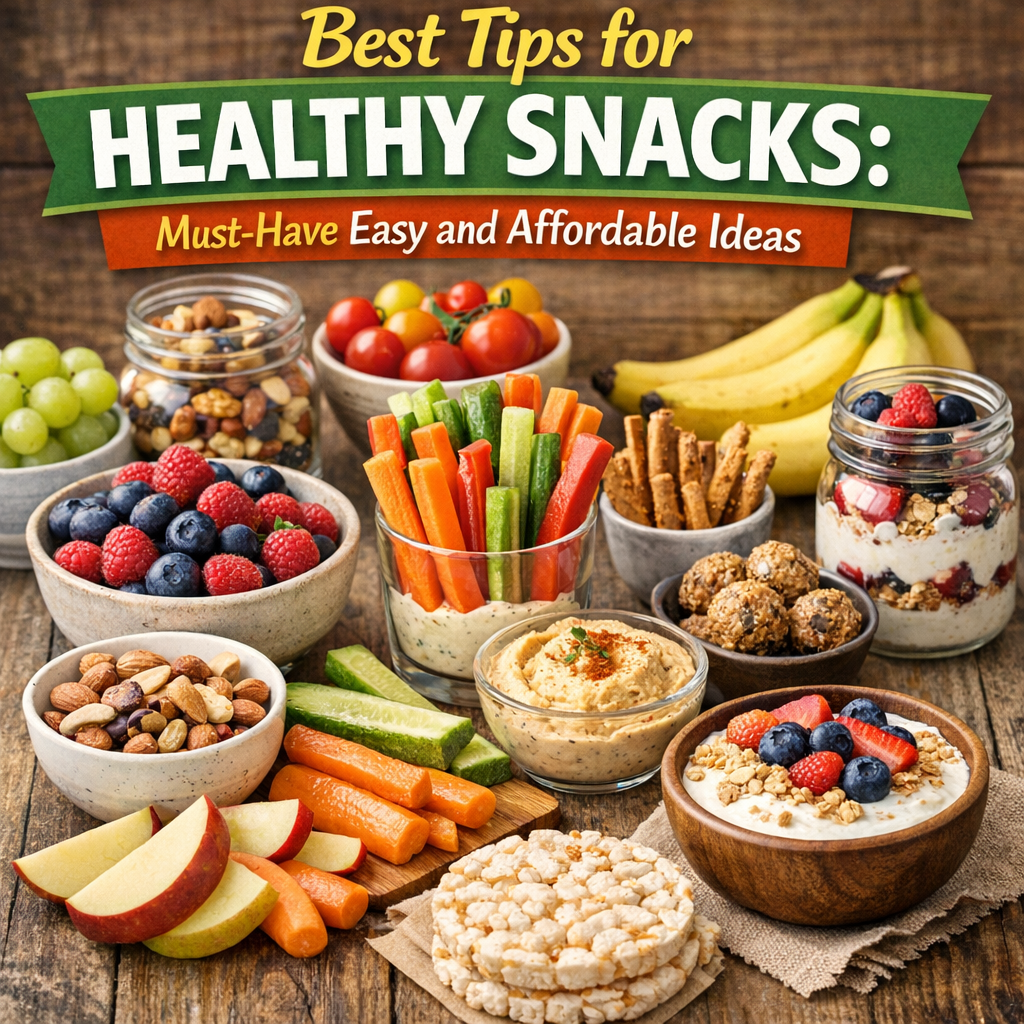
– Fruits and Vegetables: Fresh produce like apple slices, carrot sticks, and berries offer fiber, antioxidants, and natural sweetness. They’re low in calories and can be paired with protein or healthy fats for a balanced snack.
– Nuts and Seeds: Almonds, walnuts, pumpkin seeds, and sunflower seeds are rich in healthy fats, protein, and fiber. They provide sustained energy and promote satiety.
– Whole Grains: Snacks like air-popped popcorn, whole-grain crackers, and oatmeal are excellent sources of complex carbohydrates and fiber.
– Dairy or Dairy Alternatives: Greek yogurt or cottage cheese provides protein and calcium, making them satisfying options.
– Lean Proteins: Hard-boiled eggs, turkey slices, or hummus (made from chickpeas) can boost protein intake and keep hunger at bay.
Easy and Affordable Snack Ideas
Eating healthy snacks doesn’t need to be expensive or complicated. Here are some must-have ideas that combine convenience, flavor, and nutrition:
1. Veggie Sticks with Hummus
Carrot, cucumber, celery, or bell pepper sticks are easy to prepare and store. Pairing them with hummus lends a dose of protein and healthy fats. You can make your own hummus at home with chickpeas, olive oil, lemon, and garlic—or buy a store-bought version for convenience.
2. Greek Yogurt with Fresh Fruit and Nuts
This snack offers a delightful mix of protein, natural sweetness, and crunch. Use plain Greek yogurt to avoid added sugars, and top it with your favorite fruits and a sprinkle of nuts or seeds.
3. Air-Popped Popcorn
Popcorn can be a whole-grain, low-calorie snack if prepared without butter or excessive salt. Air-popping machines or microwavable plain popcorn bags make it quick and easy.
4. Apple Slices with Nut Butter
Apples offer fiber and vitamins, while nut butters, such as almond or peanut butter, contribute protein and healthy fats. Choose natural nut butters without added sugars or hydrogenated oils.
5. Boiled Eggs
Boiled eggs are a portable, affordable snack packed with high-quality protein and essential nutrients like choline and vitamin D. They’re easy to prepare in advance for quick grab-and-go options.
More Healthy Snacks Tips: Planning and Portion Control
One of the best ways to ensure you stick to healthy snacking habits is by planning ahead. Preparing snack portions in advance reduces the temptation to reach for less healthy options when hunger strikes.
– Portion your snacks: Use small containers or snack bags to measure out servings like nuts or trail mix. Avoid eating straight from the package.
– Keep healthy snacks visible: Store fresh fruits and prepped veggies within easy reach at home or work.
– Avoid processed snacks: Resist the urge to grab chips, cookies, or candy bars by having healthier alternatives on hand.
– Stay hydrated: Sometimes thirst can be mistaken for hunger. Drinking water regularly can help reduce unnecessary snacking.
Final Thoughts: Adopting Healthy Snack Habits
Adopting the best tips for healthy snacks doesn’t require a complete overhaul of your lifestyle. Small, consistent changes can lead to significant health benefits over time. Focusing on nutrient-dense foods, easy preparation methods, and mindful portion sizes helps you enjoy snacks that really nourish your body.
By integrating these healthy snacks tips into your routine, you can reduce cravings for unhealthy foods, boost energy levels, and support your wellness goals—all while keeping snacking enjoyable and affordable. Remember, the key is balance and moderation, along with the right choices, to turn daily snacks into opportunities for better health.