Yoga for Flexibility Checklist: Your Must-Have Effortless Plan
Improving your range of motion and overall body suppleness is easier than you think with the right approach. The yoga for flexibility checklist is designed to guide both beginners and seasoned practitioners through an effective and manageable routine. Flexibility isn’t just about touching your toes; it enhances your posture, reduces injury risk, and even helps manage stress. With the right yoga for flexibility plan, you can cultivate a consistent practice that fits effortlessly into your lifestyle.
Why Focus on Flexibility in Yoga?
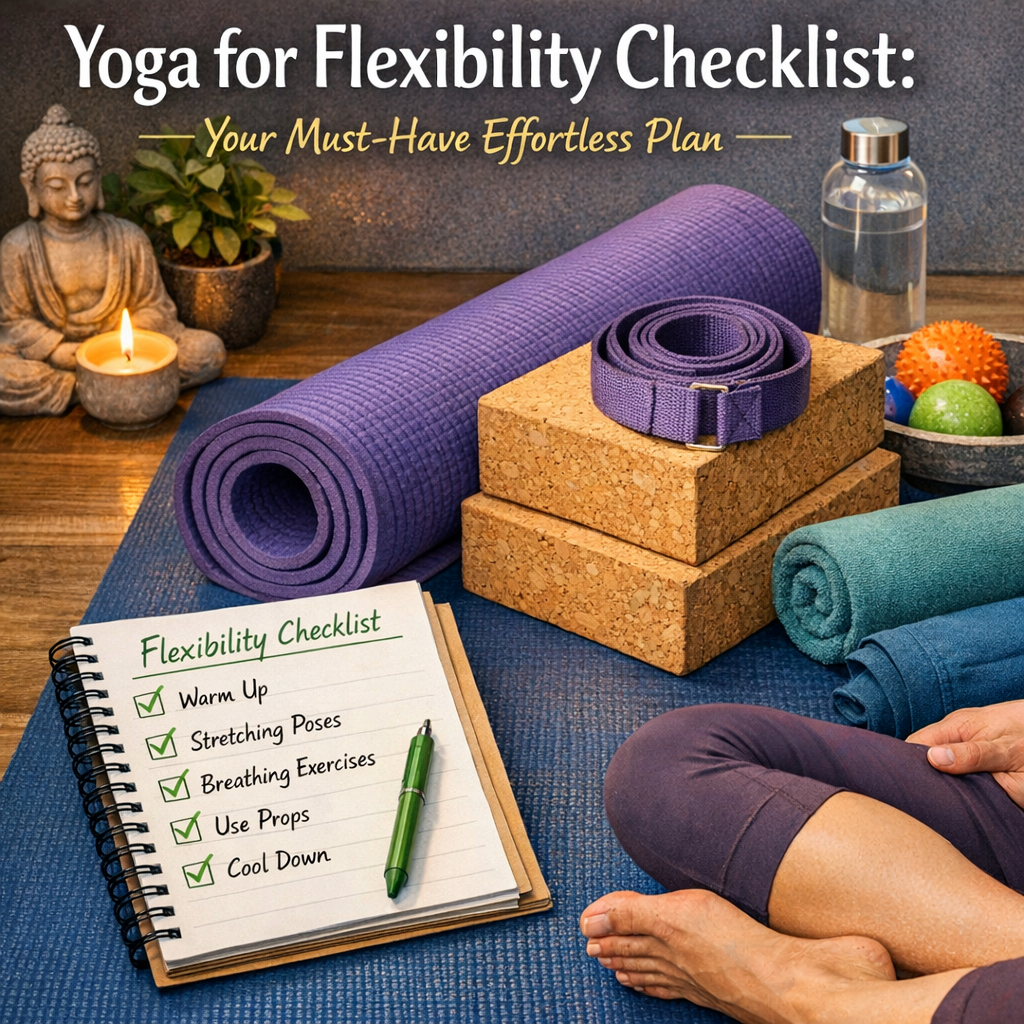
Many people start yoga to increase flexibility, but sometimes they don’t know where to begin or how to track progress. Flexibility contributes to fluid movement and decreased muscle stiffness, making everyday activities more comfortable. Additionally, regular stretching through yoga improves circulation and helps alleviate muscle tension, which can reduce chronic pain and stiffness.
This is why having a well-structured yoga for flexibility checklist is essential. It helps you target all the major muscle groups systematically while encouraging mindfulness and relaxation—two key components of yoga.
Crafting Your Yoga for Flexibility Plan
When creating your individualized yoga for flexibility plan, consider these critical elements:
1. Warm-Up
Start your session with gentle movements to prepare the muscles and joints for stretching. Simple cat-cow stretches or gentle seated twists help increase blood flow and reduce the risk of injury.
2. Focus on Key Areas for Flexibility
Flexibility varies from person to person, but these commonly tight areas deserve special attention:
– Hamstrings: Poses like Forward Fold (Uttanasana) and Downward Dog (Adho Mukha Svanasana) stimulate hamstring flexibility.
– Hip Flexors: Try Low Lunge (Anjaneyasana) and Pigeon Pose (Eka Pada Rajakapotasana) to open your hips.
– Spine: Cat-Cow Pose and Cobra Pose (Bhujangasana) encourage spinal mobility.
– Shoulders: Thread-the-Needle and Cow Face Pose (Gomukhasana) improve shoulder flexibility.
3. Hold Poses Mindfully
A crucial part of the yoga for flexibility plan is not rushing through stretches. Hold each pose for 20 to 60 seconds, focusing on deep breathing and maintaining comfort without pain. This allows the muscles and connective tissues to gradually lengthen and adapt.
4. Include Balance and Core Work
A flexible body is also a stable and strong one. Incorporate balance and core-strengthening poses such as Tree Pose (Vrikshasana) or Boat Pose (Navasana) to support your newfound flexibility and prevent injury.
5. Cool Down and Relaxation
End every session with calming poses such as Child’s Pose (Balasana) or Corpse Pose (Savasana). These help the nervous system relax and aid muscle recovery by increasing blood flow and oxygenation.
Essential Tools for Your Yoga for Flexibility Checklist
While your body is the primary instrument, a few tools can enhance your flexibility journey:
– Yoga Mat: Provides cushioning and stability.
– Yoga Blocks: Assist in reaching the ground or extending poses comfortably.
– Resistance Bands: Useful for deepening stretches safely.
– Comfortable Clothing: Allows unrestricted movement.
How Often Should You Practice?
Consistency is key in any flexibility routine. Aim for at least three to four sessions per week, each lasting 20-40 minutes. Over time, increase the intensity and duration safely to avoid over-stretching or injuries.
Tracking Progress with Your Checklist
Monitoring your progress helps maintain motivation. Use your yoga for flexibility checklist to note:
– Which poses feel easier over time.
– How long you can comfortably hold stretches.
– Any expansion in your range of motion.
– Improvements in posture and pain relief.
Keep a yoga journal or use an app to record these details, enabling a structured look at your achievements and areas needing focus.
Benefits Beyond Flexibility
Following a yoga for flexibility plan not only enhances physical pliability but also promotes mental clarity. Yoga encourages mindfulness and stress reduction through breath work and meditation, making your overall health better.
Final Thoughts
Starting a yoga for flexibility checklist can transform your exercise routine into a holistic, low-impact practice that nurtures your body and mind. By including targeted stretches, mindful holds, and consistent effort, you’ll notice remarkable improvements in mobility and well-being without needing complex equipment or long hours.
Make flexibility your priority today by embracing this effortless plan, and enjoy the freedom of movement that comes with a flexible, balanced body.