Yoga for Flexibility for Beginners: Must-Have Tips for Effortless Gains
Yoga for flexibility for beginners is an excellent way to start improving your body’s range of motion, reduce muscle stiffness, and enhance overall well-being. Flexibility doesn’t happen overnight; it requires patience, consistency, and the right approach. For those new to yoga, incorporating beginner yoga for flexibility into their routine can be both rewarding and empowering.
In this article, we’ll explore essential tips to help you gain flexibility effortlessly through yoga, whether you’re stepping on the mat for the first time or returning after a long break. Let’s dive into practical advice to make your yoga journey enjoyable and effective.
Understanding the Importance of Flexibility in Yoga
Flexibility is more than just the ability to touch your toes—it’s about letting your muscles, tendons, and joints move freely and without pain. Beginner yoga for flexibility focuses on gentle stretching and controlled movements, which can gradually lengthen muscles and improve joint mobility.
By integrating flexibility in your yoga practice, you can experience improved posture, better balance, and reduced risk of injury. For beginners, flexibility gains serve as a foundational benefit that enhances other aspects of health, including strength and mental focus.
Essential Tips for Yoga for Flexibility for Beginners
Getting started with yoga for flexibility requires mindful strategies to ensure safe and progressive improvements. Here are some must-have tips for beginners:
1. Choose the Right Beginner Yoga Poses
Start with poses specifically designed to gently stretch and open key muscle groups. Some beginner-friendly flexibility poses include:
– Downward Dog (Adho Mukha Svanasana): Great for lengthening the hamstrings, calves, and spine.
– Cat-Cow Stretch (Marjaryasana-Bitilasana): Helps improve spinal flexibility and warms up the back.
– Child’s Pose (Balasana): Opens hips and relaxes the lower back.
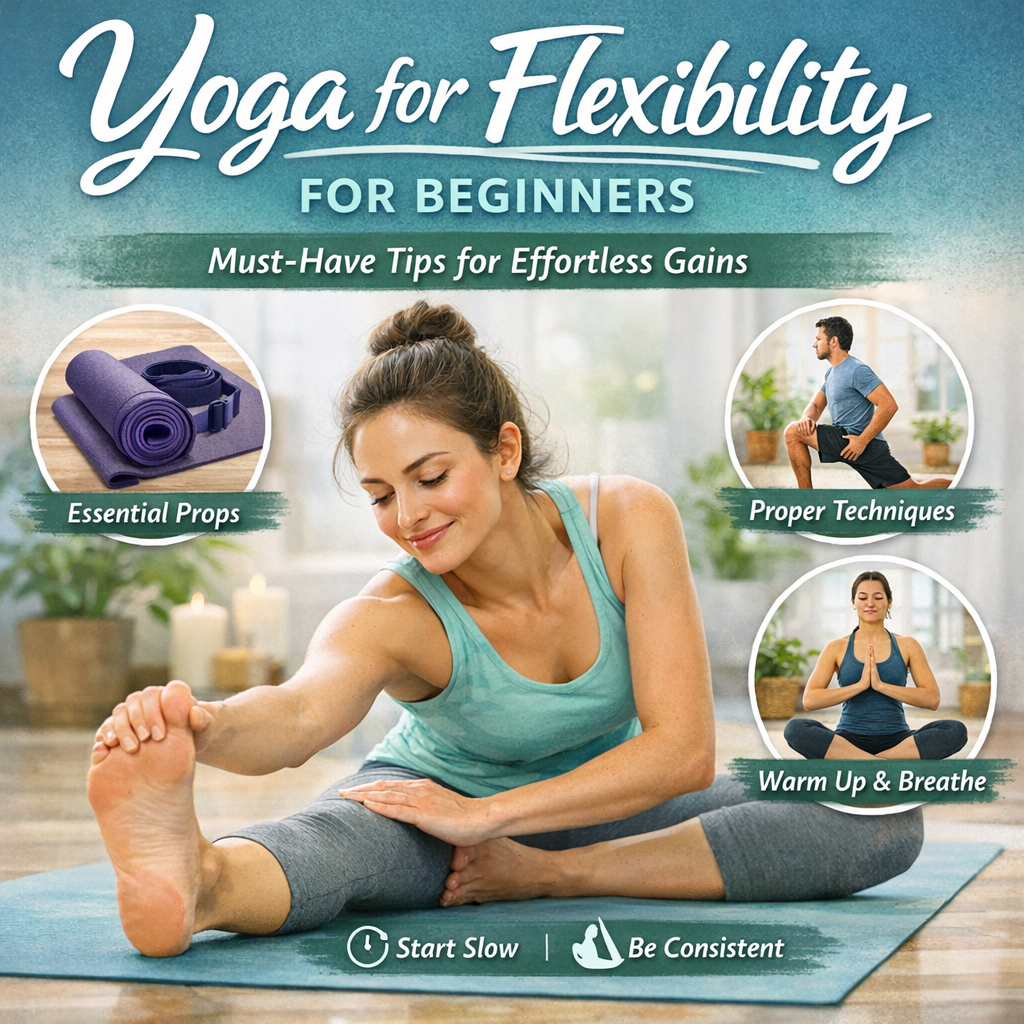
– Seated Forward Bend (Paschimottanasana): Stretches the hamstrings and lower back safely.
– Cobra Pose (Bhujangasana): Encourages flexibility in the spine and chest.
By focusing on these simple poses, beginners can work on flexibility progressively without strain.
2. Warm Up Before You Stretch
Engaging in a gentle warm-up before performing flexibility exercises is crucial to prevent injury and maximize your gains. You can start with light dynamic movements such as arm circles, gentle twists, or brisk walking. This warms your muscles and prepares them for deeper stretching during yoga.
3. Breathe Deeply and Consistently
Breath control is a cornerstone of yoga practice. When working on flexibility, deep, steady breaths help relax muscles and increase oxygen flow, which promotes stretching. Inhale to lengthen your spine and exhale as you gently deepen your stretch.
Doing this consciously can prevent holding tension in your body and helps you stay present during each pose.
4. Be Patient and Consistent
Flexibility improvement takes time, especially if you have tight muscles. It’s important to practice beginner yoga for flexibility regularly—ideally at least 3-4 times a week.
Avoid pushing yourself too hard to reach a certain pose or depth too soon. Consistency combined with gradual progress is the key to effortless flexibility gains.
5. Use Props and Modifications
Yoga props like blocks, straps, and bolsters can be invaluable aids for beginners working on flexibility. For example, a yoga strap around the feet during seated forward bends can make stretching more accessible without compromising form.
Don’t hesitate to modify poses or use props to ensure safety and comfort. This encourages you to maintain proper alignment and allows flexibility improvements at your own pace.
Creating a Beginner Yoga for Flexibility Routine
Building a simple routine that centers on flexibility can help anchor your practice. Here’s a sample 15-minute sequence tailored for beginners:
1. Child’s Pose (1-2 minutes): Settle into your mat and open your hips.
2. Cat-Cow Stretch (1-2 minutes): Mobilize your spine.
3. Downward Dog (2 minutes): Lengthen your hamstrings and calves.
4. Low Lunge with Side Stretch (1-2 minutes each side): Open hips and sides.
5. Seated Forward Bend (2 minutes): Stretch hamstrings and lower back.
6. Cobra Pose (1-2 minutes): Increase spinal flexibility.
7. Supine Twist (1-2 minutes each side): Release tension in the spine.
8. Savasana (2-3 minutes): Relax and integrate the benefits.
This routine offers a balanced approach to flexibility and can be adapted based on your comfort and progress.
Final Thoughts on Yoga for Flexibility for Beginners
Starting yoga for flexibility for beginners is a journey best approached with kindness and mindfulness. Flexibility is a gradual process, and the key lies in enjoyable, consistent practice coupled with proper technique.
Remember to listen to your body, respect its limits, and celebrate each small gain. With time, beginner yoga for flexibility can transform not only your physical health but also your mental clarity and emotional balance.
So, roll out your mat, follow the tips shared here, and let your body unfold naturally—effortless gains are well within your reach!